


Running a WooCommerce store with multiple brands can quickly become overwhelming for your customers. They land on your shop page and see hundreds of products from dozens of different brands all mixed together.
We’ve watched customers scroll endlessly through product pages, trying to find items from their favorite brand. Most of them give up after a minute or two and leave the site without buying anything.
The problem gets worse as your inventory grows. Adding more brands should help your business, but without proper filtering, it just creates more clutter for shoppers to wade through.
In this article, we’ll show you how to filter brands on your WooCommerce store using WPFilters.
Why Brand Filters Matter for Your WooCommerce Store
Before we jump into the tutorial, let’s talk about why brand filtering can transform your WooCommerce store.
Think of your store like a department store without any signs or sections. Customers who want Nike shoes have to walk past every single brand in the building just to find what they’re looking for.
Brand filters solve this problem by letting shoppers instantly narrow down products to only the brands they trust. Someone shopping for Apple accessories doesn’t want to scroll past dozens of generic brands to find what they need.
We’ve noticed that stores with brand filters keep visitors browsing longer. When customers can easily find their favorite brands, they’re more likely to explore multiple products and make a purchase.
Brand loyalty is real, and your customers have preferences. Some shoppers only buy organic skincare brands, while others stick to budget-friendly options from specific manufacturers.
Without filters, you’re forcing brand-conscious customers to work too hard. They’ll often leave your site and buy from a competitor who makes brand shopping easier.
Adding brand filters also sets your store apart from competitors who haven’t implemented this feature. It shows customers that you understand their shopping preferences and care about their experience.
That said, let’s see how you can easily add brand filters to your site.
Filter Brands on Your WooCommerce Store
The easiest way to add brand filters to your WooCommerce store is by using WPFilters.

WPFilters is the best WordPress filtering plugin that makes adding brand filters simple, even if you’ve never set up anything like this before.
It’s built by the same team behind SearchWP, which means you’re getting a tool from experts who understand how filtering and search work together.
Using WPFilters, you can create professional brand filters without touching a single line of code. The plugin handles all the technical work while you just click through simple settings.
Here are some features you get with WPFilters:
- Multiple Filter Types: Choose from checkboxes, dropdowns, radio buttons, slider range, or search bars for your brand filter.
- WooCommerce Integration: Works seamlessly with WooCommerce product brands and attributes.
- Shareable Filter URLs: Every filtered search creates a unique link that customers can bookmark or share.
- Place Filters Anywhere: Add brand filters to your shop page, sidebar, or any custom location using Gutenberg blocks.
- Customization Options: Control how your filters look with titles, item counts, and collapsible sections.
Now, let’s walk through the steps to add brand filtering to your WooCommerce store.
Step 1: Install and Activate WPFilters
First, you’ll need to visit the SearchWP website and sign up for a WPFilters account.
Once you’ve created an account, simply head to your account area and go to the ‘Downloads’ tab.
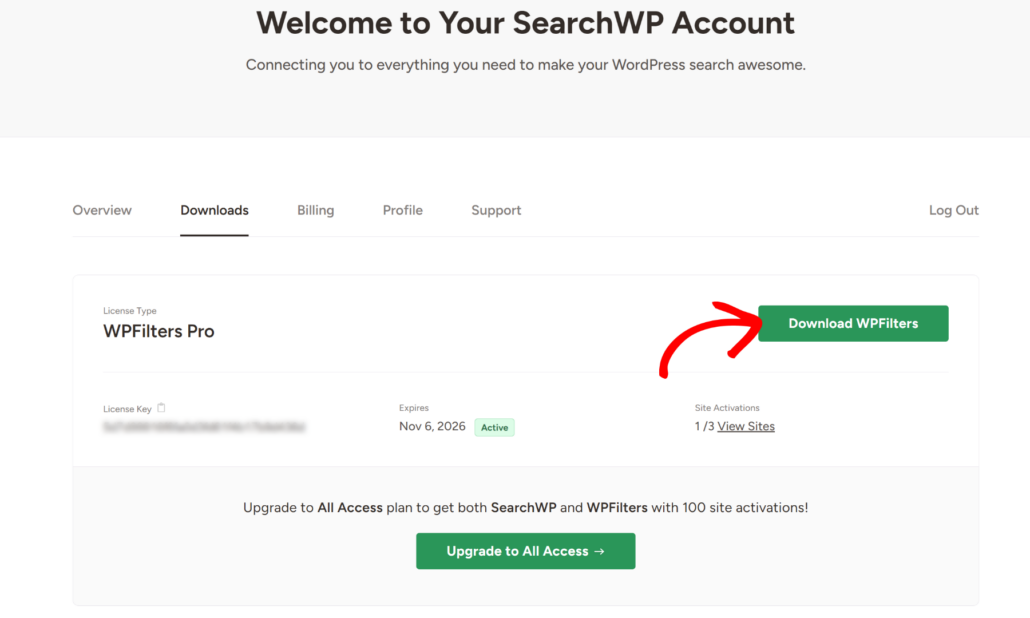
From here, you’ll need to click the Download WPFilters button and save the plugin files on your computer.
We also recommend copying the License Key from this page, as you’ll need it to activate the plugin.
Next, you can upload the WPFilters plugin files to your WordPress site and install the plugin. If you need help with this, then please see this guide on how to install a WordPress plugin.
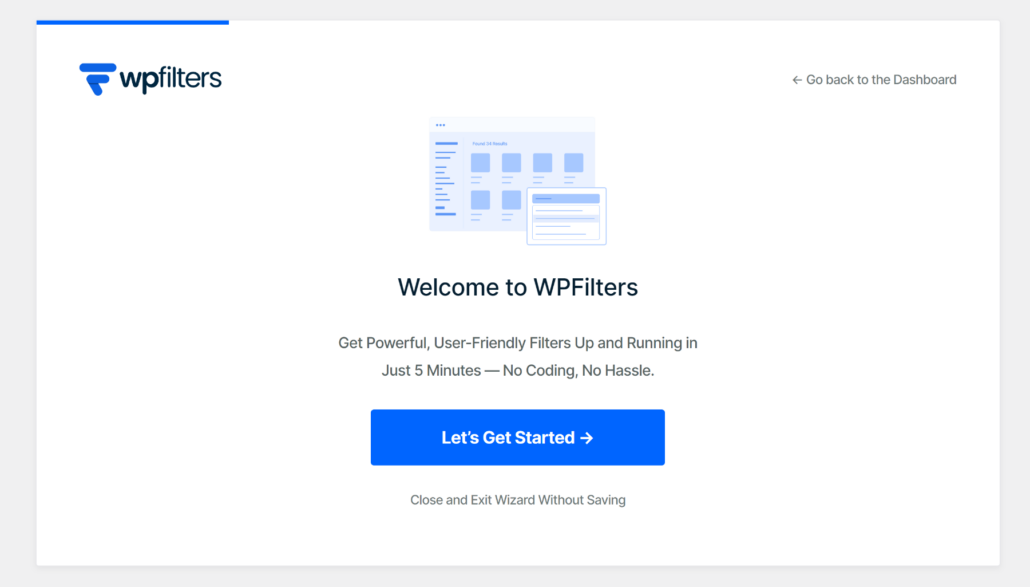
After activating the plugin, you will see the WPFilters setup wizard. Go ahead and click the ‘Let’s Get Started’ button and follow the onscreen instructions.
Once you’ve completed the setup wizard, you’re ready to create your first brand filter.
Step 2: Create a Brand Filter Element
Next, you’ll need to create a new filter element that your customers will use to sort products by brand.
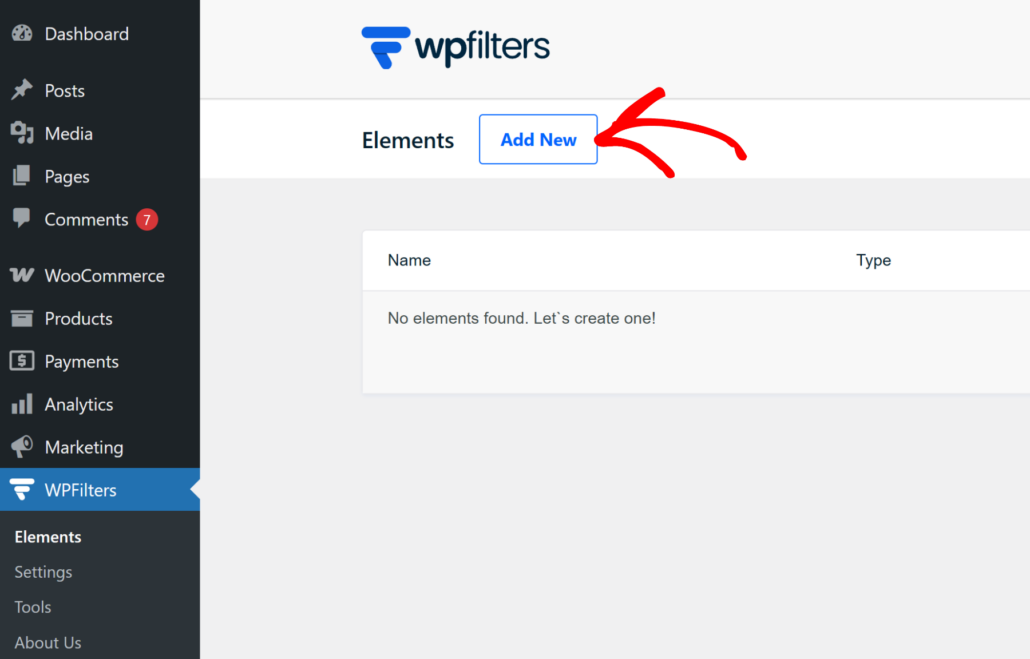
To start, head to WPFilters » Elements from the WordPress dashboard and simply click the ‘Add New’ button.
On the next page, you can start setting up your brand filter.
First, enter a name for your filter at the top, like “Filter by Brand” or “Product Brands.” This name helps you stay organized if you create multiple filters later.
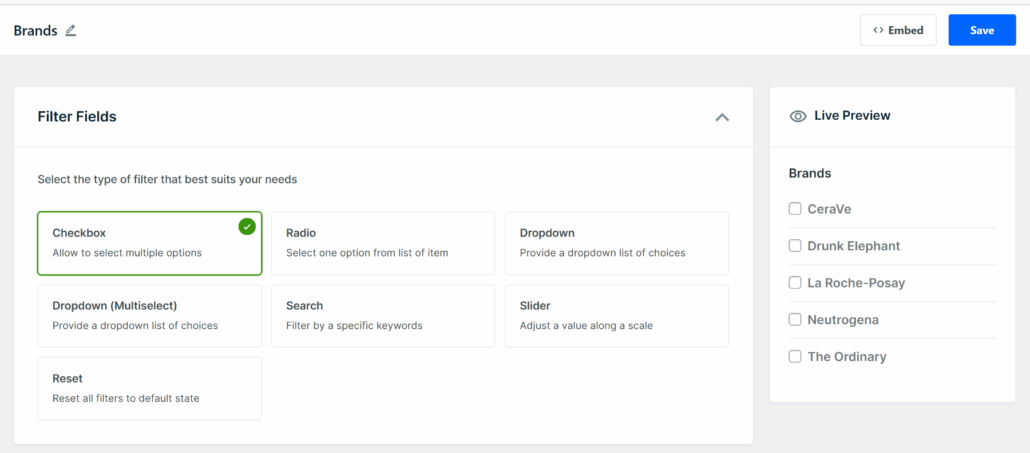
After that, you’ll need to select the type of filter you want to create. WPFilters offers multiple options, such as a checkbox, a radio list, a dropdown, a search bar, and more.
For this tutorial, we’ll use the ‘Checkbox’ option because it lets customers select multiple brands at once.
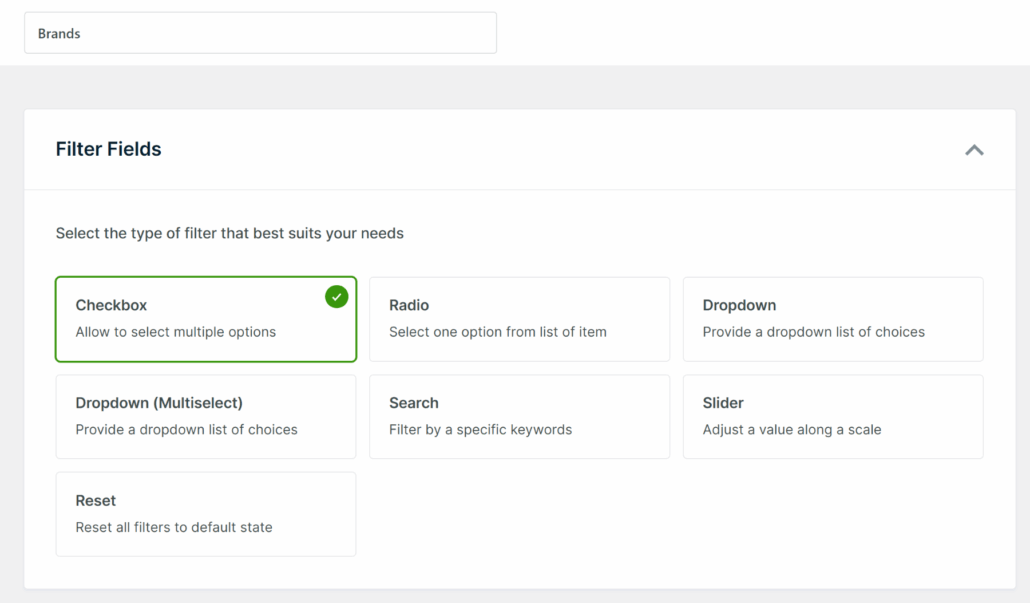
You’ll also see a live preview of your brand filter in the panel on the right. This allows you to see exactly how it will look to your customers.
Step 3: Connect the Filter to Brand Data
Now you need to tell the filter which data to use for sorting your WooCommerce products.
Simply scroll down to the ‘Data Source’ section and click the dropdown menu.
Here, you’ll see different options for product data. Since you want to filter by brands, go ahead and select the Brands (product_brand) option from the list.
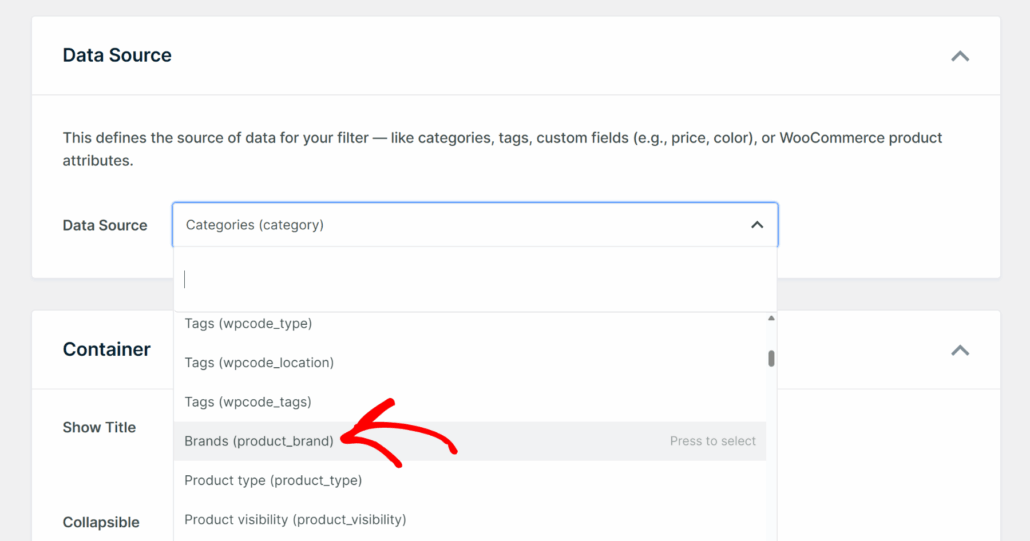
WPFilters will automatically detect all the brands you’ve added to your products. This means the filter will display every brand that exists in your store’s inventory.
The filter will also update automatically when you add new brands to your products in the future.
Step 4: Customize Your Brand Filter
After connecting the brand data, you can customize how the filter looks and behaves on your store.
Simply scroll down to the ‘Container’ section to adjust the display settings.
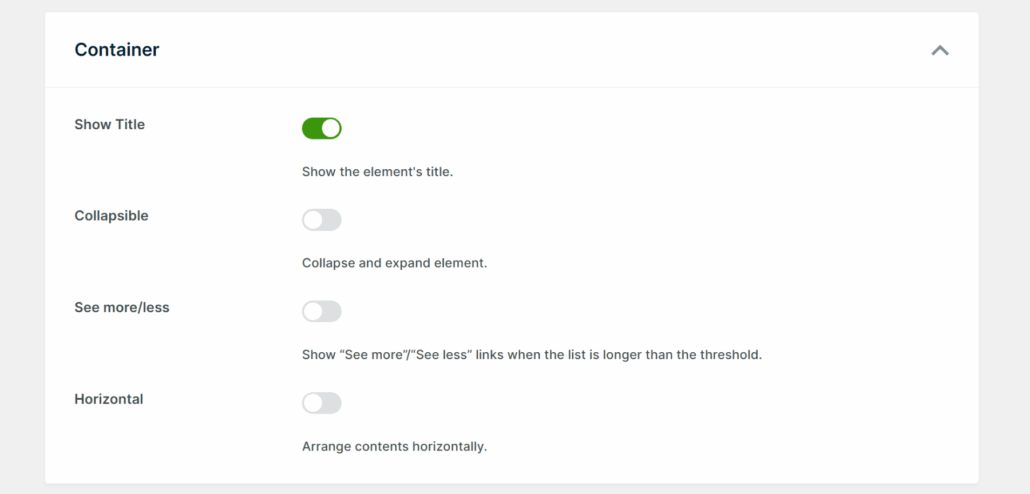
Here, you can enable the ‘Show Title’ option so customers see a clear label like “Filter by Brand” above the filter.
You can also turn on the ‘Collapsible’ option to let visitors hide the filter when they don’t need it, which saves space on mobile devices.
If you want the brand names to appear side-by-side instead of in a vertical list, enable the ‘Horizontal’ option.
Next, scroll down to the ‘Items’ section to control how individual brands appear in the filter.
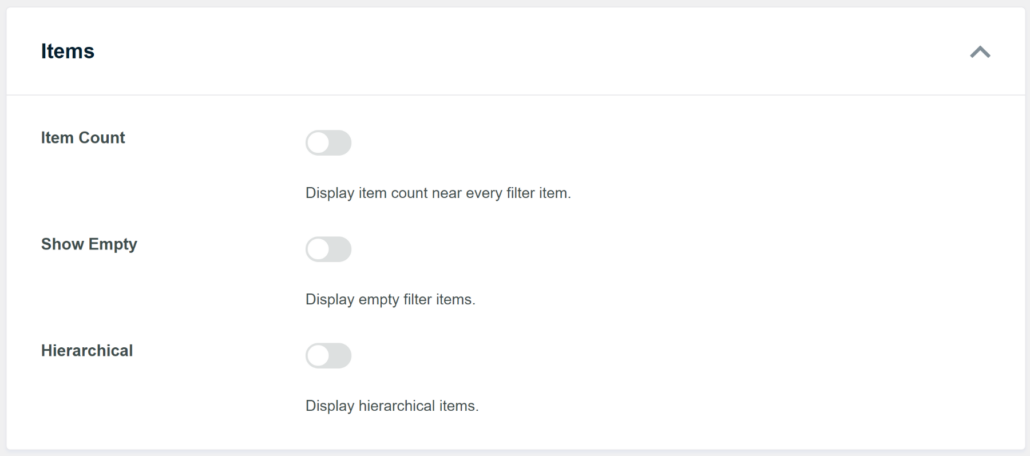
If you want, you can enable ‘Item Count’ so customers can see how many products are available for each brand. This helps set expectations before they click.
You can also consider turning off ‘Show Empty’ to hide brands that don’t have any products in stock. This prevents customers from clicking on a brand only to find zero results.
When you’re satisfied with all the settings, scroll to the top of the page and click the Save button.
Step 5: Add the Brand Filter to Your Store
Now that your brand filter is ready, the next step is to display it on your WooCommerce store, where customers can actually use it.
WPFilters makes this process simple by offering multiple ways to embed your filter.
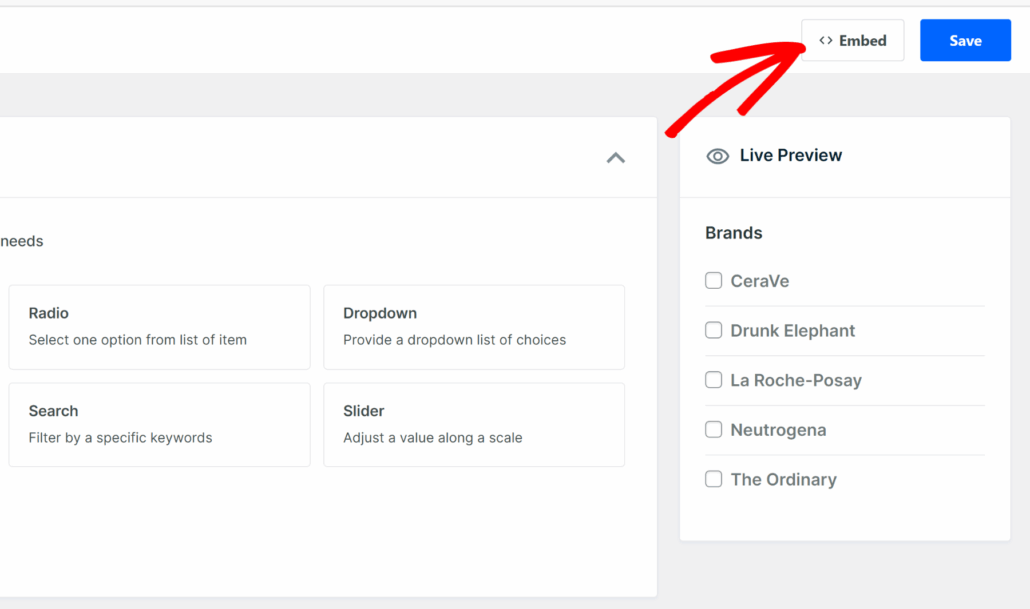
To get started, simply click the ‘Embed’ button at the top of the Elements page.
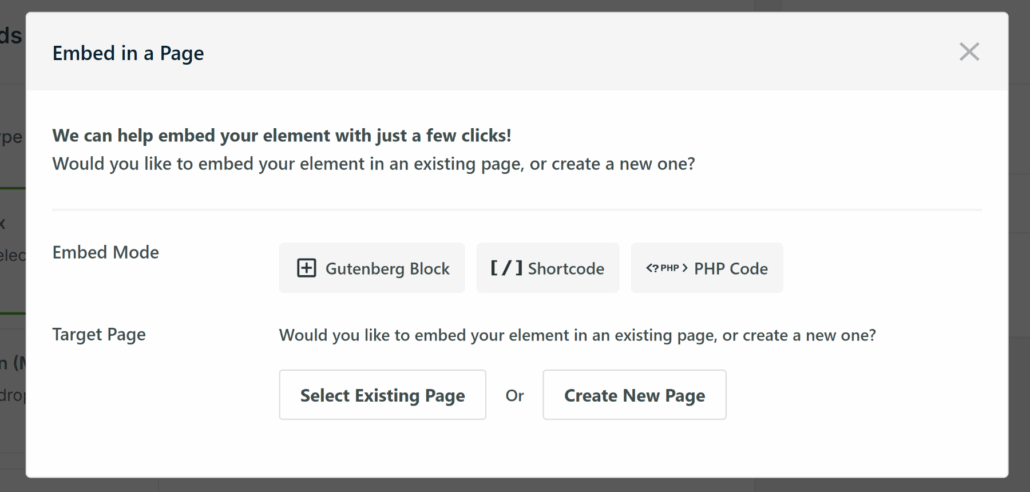
Next, you’ll see a popup window with different embedding options.
You can choose between the Gutenberg block, a shortcode, or PHP code if you’re a developer.
However, the best method to add your brand filter is in the sidebar of your store.
Adding the filter to your sidebar keeps it visible while customers browse different pages of your store.
To do this, head to Appearance » Widgets from your WordPress dashboard.
Note: The steps might vary slightly depending on the WordPress theme you’re using for your WooCommerce store.
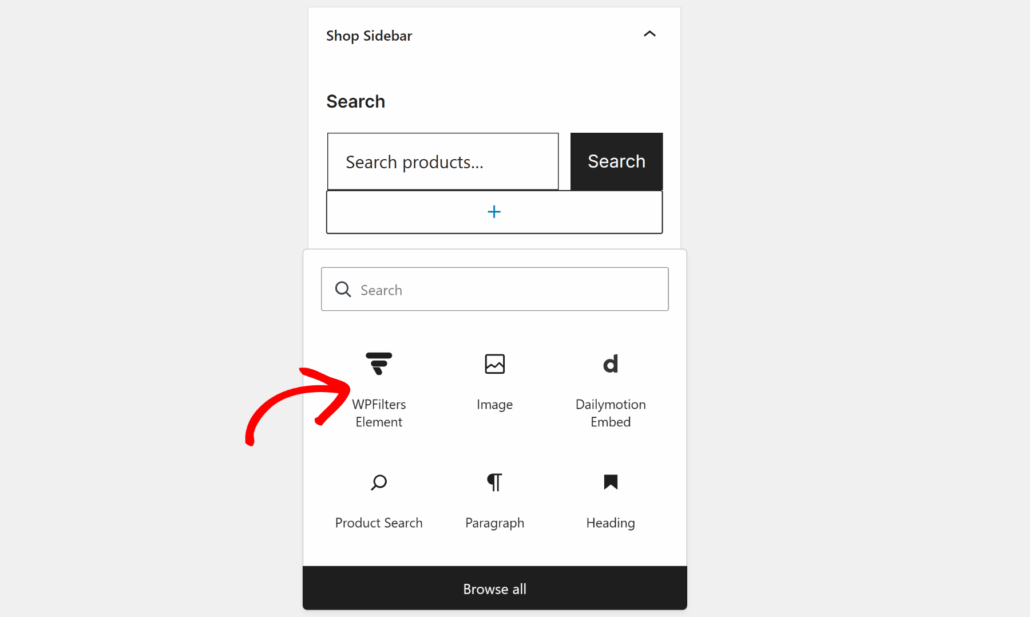
Next, scroll down to your WooCommerce sidebar section and click the ‘+’ button to add a new block. Search for and add the WPFilters Element widget block.
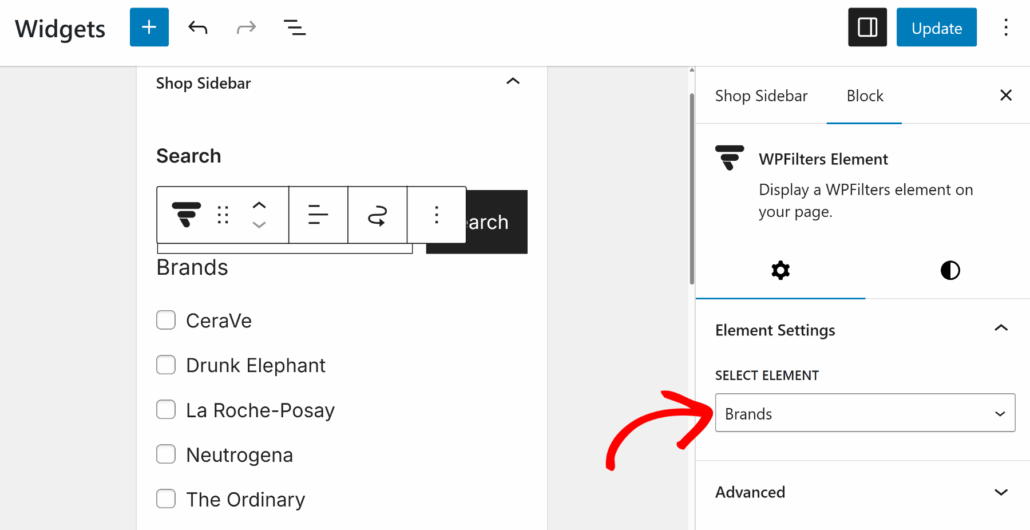
From the settings panel on the right, click the ‘Select Element’ dropdown menu and choose the brand filter you created earlier.
When you’re done, click the Update button to save your changes.
Step 6: Test Your Brand Filter
After adding the brand filter to your WooCommerce store, the next step is to test it and make sure everything works correctly.
Simply visit your shop page to see the brand filter in action.
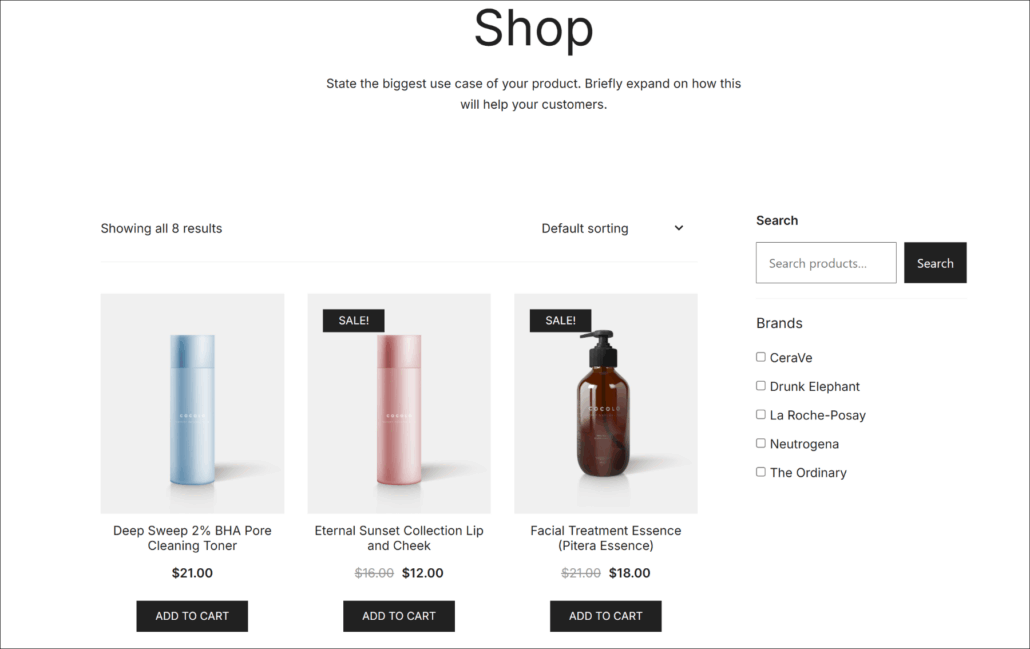
You should see your brand filter displayed either on the shop page or in the sidebar, depending on where you placed it in the previous step.
Now, try selecting different brands from the filter. The products on the page should update automatically to show only items from the brands you selected.
For example, if we select “CeraVe” on our demo store, then only products from this specific brand will be shown, while hiding everything else.
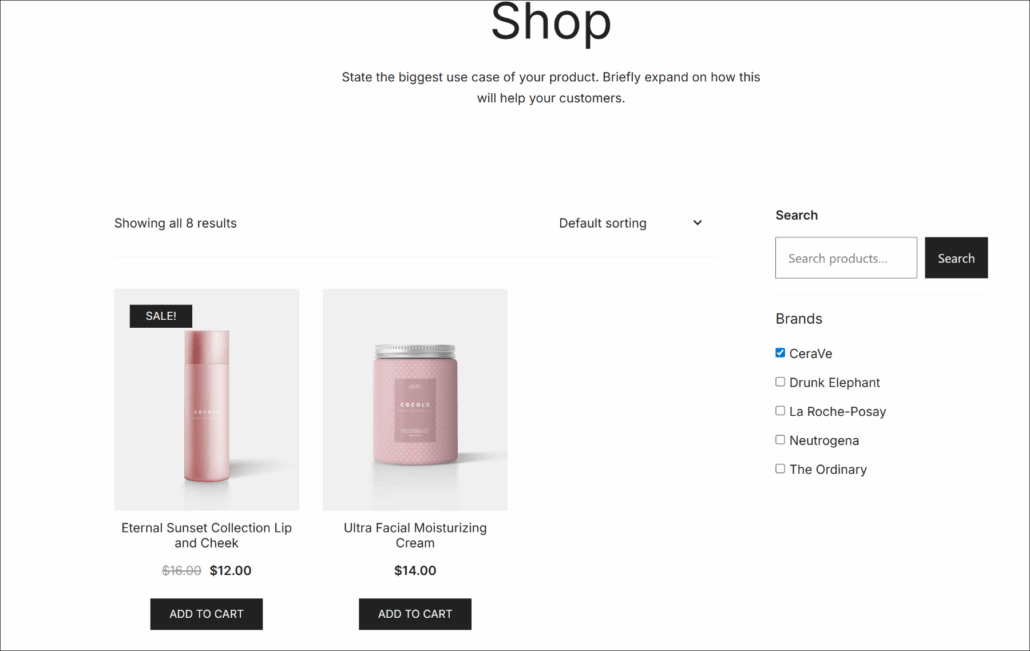
If everything is working correctly, your customers can now easily filter products by their favorite brands, making it much easier for them to find exactly what they’re looking for.
FAQs About WooCommerce Brand Filters
Here are some common questions we get about setting up brand filters in WooCommerce.
1. Do I need coding knowledge to set up brand filters in WooCommerce?
Not at all. WPFilters handles all the technical work for you, so you can create brand filters just by clicking through the settings. We designed this tutorial specifically for store owners who don’t have coding experience.
2. Will this work with my current theme?
Yes, WPFilters works with almost every WooCommerce theme. We’ve tested it with popular themes it integrates smoothly with their layouts.
3. Can I combine brand filters with other filters, like price or category?
Absolutely. You can create multiple filter elements in WPFilters and stack them together. For example, you could let customers filter by brand, price range, and product category all at the same time. This gives shoppers very precise control over what they see in your store.
Brand filters transform the shopping experience in your WooCommerce store by helping customers find their favorite manufacturers instantly.
We hope this article helped you learn how to filter brands on your WooCommerce store. You may also want to see our guides on how to filter WooCommerce products by category and how to filter WooCommerce products by attributes.
Ready to make brand shopping easier for your customers? You can get started with WPFilters here.