

Installation
When you purchase a license for SearchWP, you will receive a link to download the latest version. You can either upload that ZIP file within the WordPress admin or upload via FTP and activate SearchWP.
Note: If you are upgrading from version 3 please review the Migration Guide
To upload your .zip navigate to Plugins > Add New in the WordPress Administration Area and click Upload:
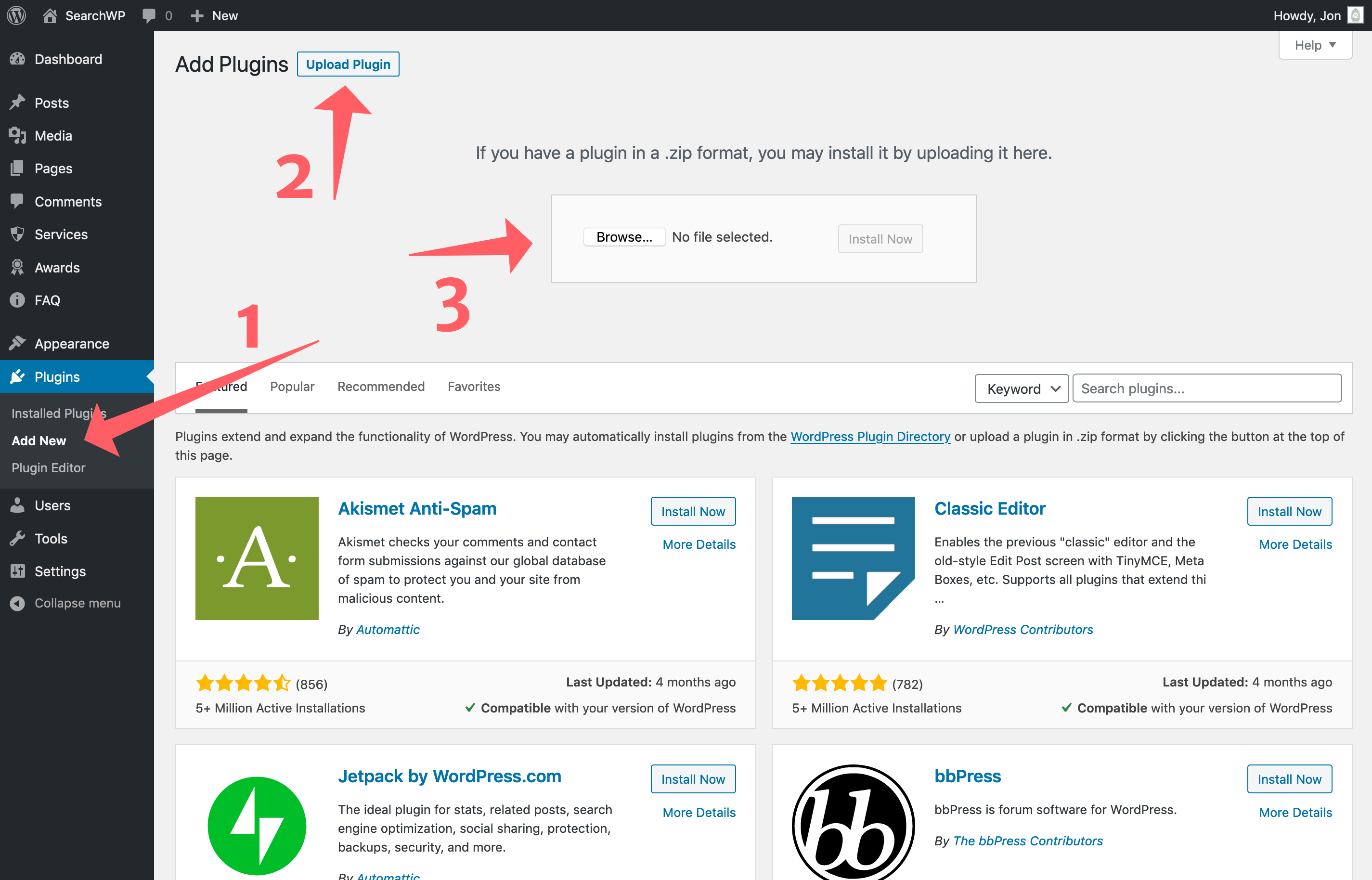
Once the installation is complete, you can activate SearchWP by locating it in your plugins list and clicking the “Activate” link. The plugin will then be active and ready for initial configuration.
Onboarding Wizard
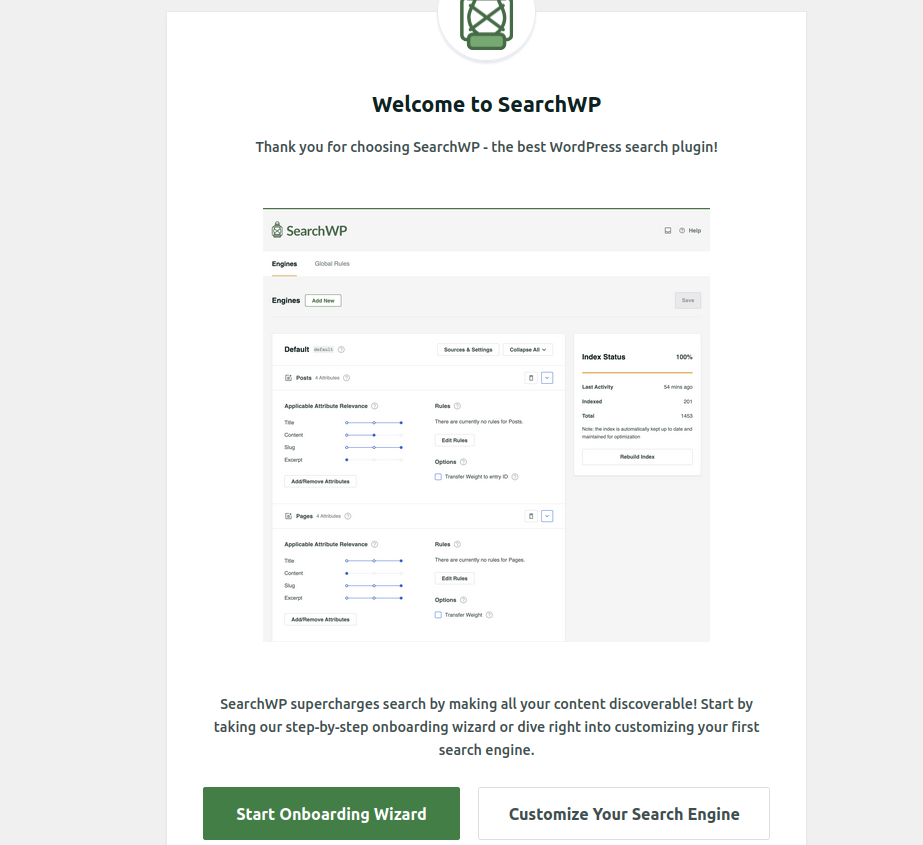
Upon plugin activation, you will be automatically redirected to the SearchWP onboarding wizard screen. This step-by-step guide helps you easily configure SearchWP based on the specific search requirements of your site, ensuring that you have the essential settings in place from the start.
Click the “Start Onboarding Wizard” button to begin the guided setup process. The wizard will walk you through the most important configuration steps to get SearchWP running on your site.
Configure Search Engine
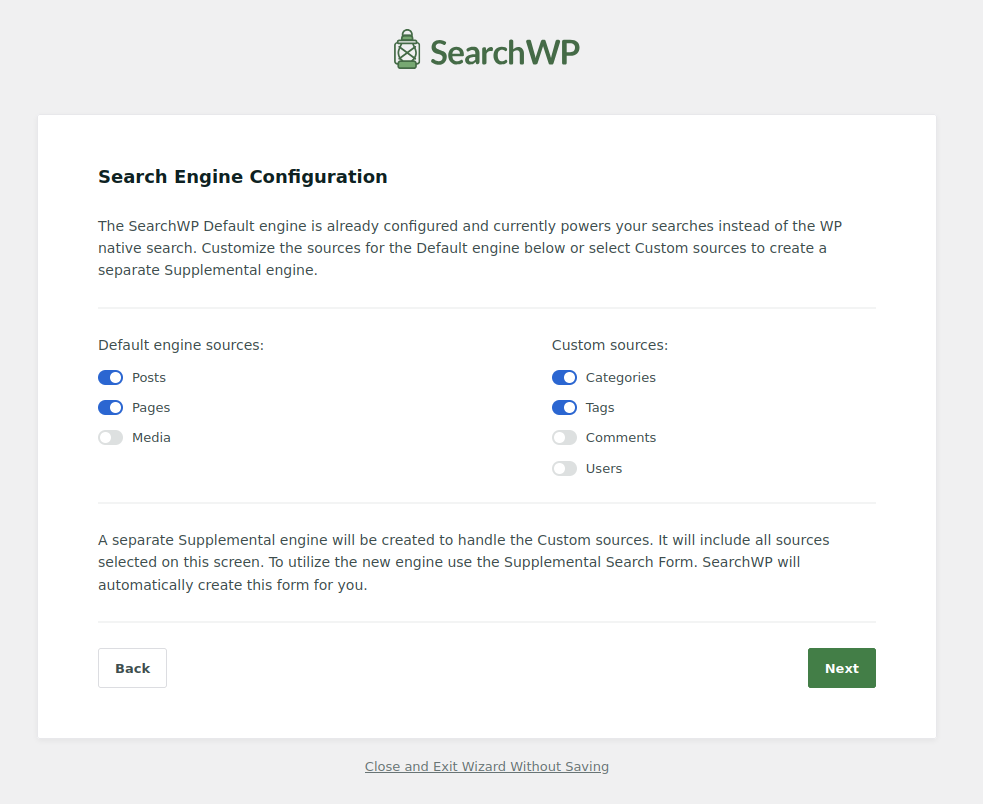
On the first configuration screen, you’ll have the option to set up your search engine by selecting which post types and custom sources you want to make searchable on your site. All custom post types that are registered on your WordPress installation will be listed on this page, making it easy to identify which content types are available for search indexing.
Click the “Make Changes” button to enable or disable specific post types that you want to include in your search results.
Custom Sources and Taxonomies
In addition to standard post types, the wizard displays custom sources such as users, categories and any custom taxonomies registered on your site. SearchWP has the powerful ability to find results for WordPress registered taxonomies like categories and tags, as well as any custom taxonomies created by plugins or your theme.
You can enable these sources directly from the wizard screen. Once enabled, SearchWP will create a separate supplemental engine specifically designed to search and display results for these custom sources
Recommended Extensions
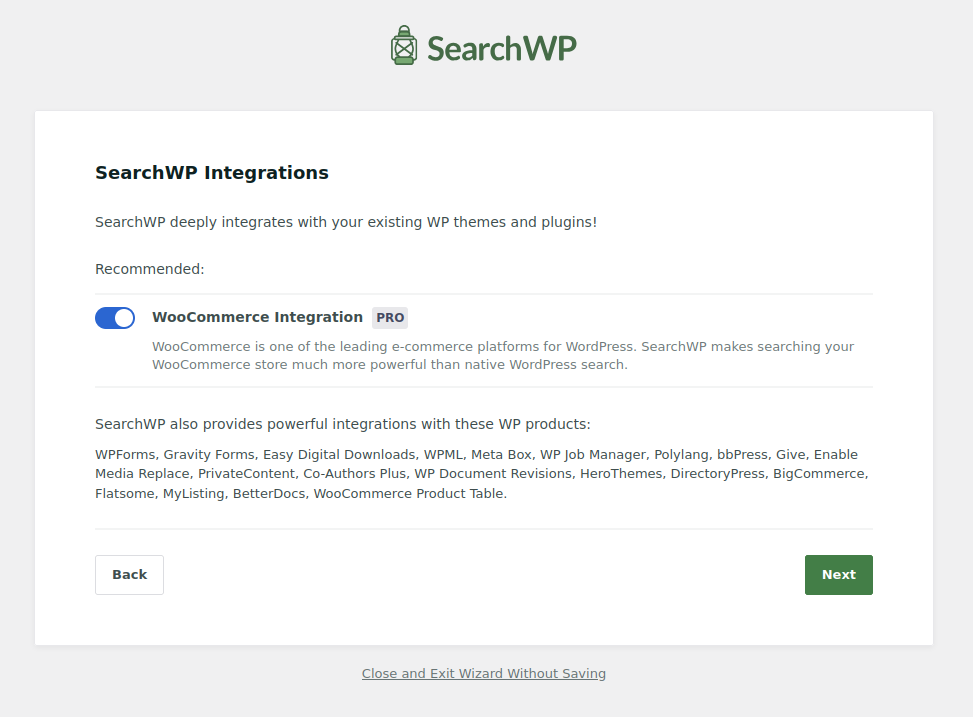
In the next step, SearchWP will present a curated list of important extensions based on your site’s content and configuration. You can consider installing and activating these extensions depending on your license plan and specific requirements.
WooCommerce Integration: Seamlessly integrates with WooCommerce product forms to display product results on your site’s product archive pages, enhancing the shopping experience for your customers.
SearchWP Metrics: Provides detailed statistics and comprehensive information about popular searches performed by users on your site, helping you understand search behavior and content gaps.
SearchWP Live Search: Displays live search results in a dropdown menu beneath the search form as users type their keywords, creating an instant, responsive search experience.
SearchWP Modal Form: Enables you to display search forms in a modal popup overlay on your site, providing a modern, unobtrusive search interface.
Custom Results Order: Allows you to prioritize specific posts to appear at the top of search results for any search term on your site, giving you editorial control over search rankings.
Select the extensions you want to install for your site based on your needs and license capabilities. These extensions can significantly enhance SearchWP’s functionality and user experience.
License Activation
In the next step, you’ll be prompted to activate your SearchWP license by entering your license key. If you choose to skip this step during the onboarding process, you can always add your license key later from the SearchWP Settings page.
Click “Next” to proceed to the final step and complete the onboarding wizard. Once the process is finished, SearchWP will automatically create the necessary engines and search forms based on your configuration choices, providing you with a fully functional search system right away.
Post-Setup Configuration
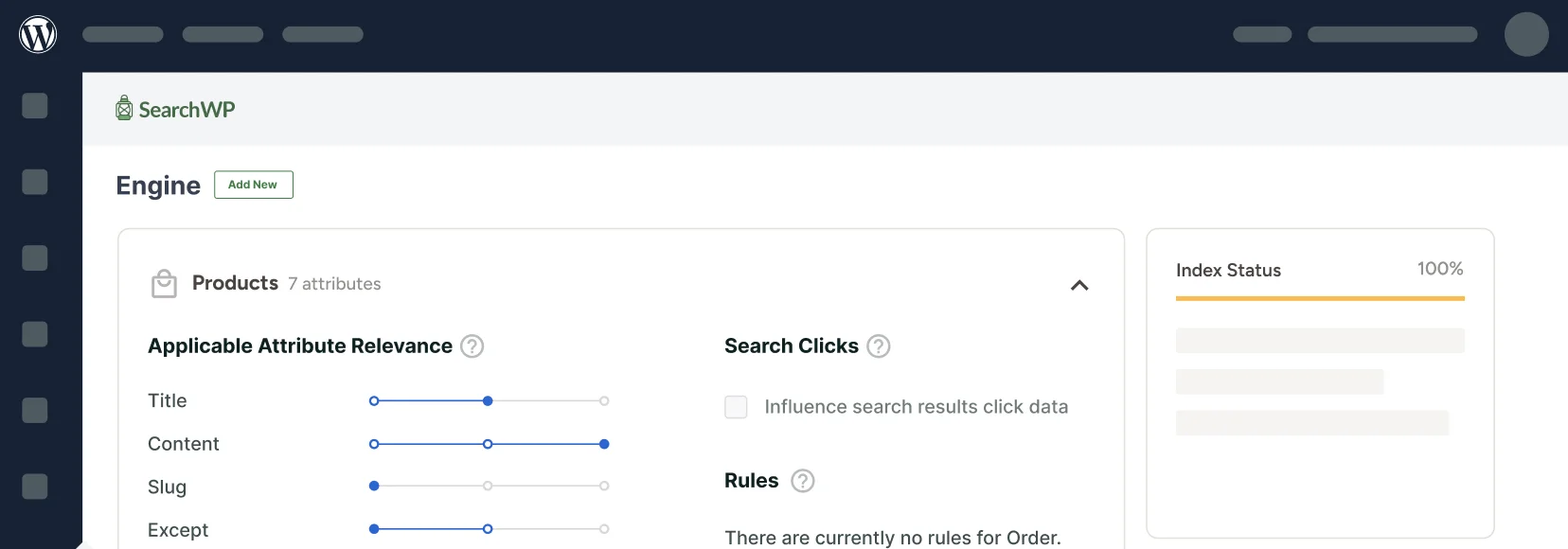
After completing the onboarding wizard, you can visit the Engine Settings page to make additional customizations to your search configuration. This includes adding custom fields and taxonomy attributes for indexing additional data, adjusting relevance weights for different content fields, and fine-tuning other advanced settings to optimize search results for your specific content structure.
Search Forms and Templates
SearchWP includes built-in integration with WordPress’s default search form and will display results using your theme’s default search template. This seamless integration means that SearchWP works out of the box with most themes without requiring any additional configuration.
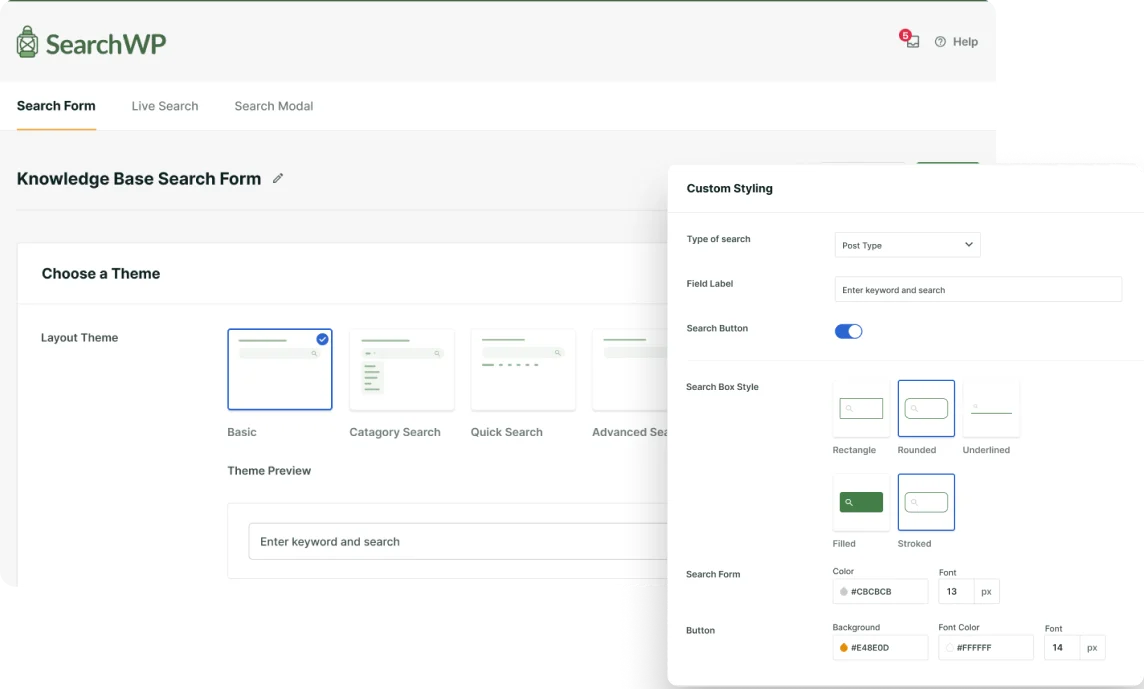
Additionally, SearchWP provides the option to create customized Search Forms that can be added to any page on your site. These custom forms can display results using a customized SearchWP template, giving you complete control over the search experience and results presentation.
Additional Configuration Tips
Create Multiple Search Forms
SearchWP allows you to create multiple search forms to search different sections of your site by utilizing supplemental engines. This powerful feature enables you to provide targeted search experiences for different content areas or user groups.
For example, you can configure a default engine to search public content available to all visitors, and then create separate supplemental engines to search members-only content or specific content categories. Once your engines are configured, create separate Search Forms for each engine to provide distinct search interfaces.
To display results from supplemental engines, you’ll need to select the SearchWP template option when configuring your search form. The layout and styling for SearchWP templates can be customized from the Template Options page in SearchWP settings, allowing you to create a consistent visual experience across different search implementations.
Finally, use shortcodes or Gutenberg blocks to add your custom search forms to different pages throughout your site. Search results will be displayed on a separate search results page using the SearchWP template, providing a dedicated space for users to browse and interact with their search results.
Search PDF Content
SearchWP includes built-in support for indexing and searching PDF documents and other text-based files such as .doc and .xls files uploaded to your WordPress media library. To enable PDF content searching, you must include the Media post type in your engine sources. Once enabled, SearchWP will automatically extract and index text content from supported document formats.
SearchWP also provides advanced options for customizing which document content should be searchable and how it’s processed during indexing. More info
Enable Partial Matches
You can enable the partial matching option in SearchWP Settings to find results for posts that contain partially matching terms. This feature is particularly useful for accommodating typos, word variations, and incomplete keywords.
By default, SearchWP prioritizes exact matches first to ensure the most relevant results appear at the top. If no exact matching posts are found for the search query, SearchWP automatically uses partial match logic to find results for posts containing partial keyword matches.
Enable Highlighting
You can enable the highlighting option in SearchWP Settings to display custom excerpts containing the search terms from your post content. When highlighting is enabled, SearchWP generates contextual snippets that show users exactly where their search terms appear within the content, making it easier to evaluate result relevance.
Highlighting is especially useful for PDF documents and lengthy content where users need to quickly identify which section contains their searched keywords. For more information on how the SearchWP highlighting algorithm works and how to customize its behavior, check this guide.
Next Steps
Once SearchWP is activated and configured, you can begin exploring the Engine Settings page to fine-tune your search configuration. Experiment with different relevance weights, add custom attributes, and test your search functionality to ensure it meets your site’s specific needs. The SearchWP documentation provides extensive guides and tutorials to help you maximize the plugin’s capabilities and create the best possible search experience for your users.