


Picture a reader who spent an hour on your blog last week. They loved an article about a topic they care about, told a colleague about it, and came back two days later to share the link.
They typed a few words into your search bar and got back nothing useful. So they left, and that conversation you sparked never went anywhere.
We’ve seen this happen on blogs of all sizes, and the culprit is almost always the same: the default WordPress search wasn’t built for real content discovery. It only scans titles and body content, ranks by date instead of relevance, and fails the moment a reader makes a typo.
The good news is that fixing it doesn’t require any coding. In this article, we’ll show you how to make your WordPress blog searchable with SearchWP in a few straightforward steps.
Why It’s Necessary To Make WordPress Blogs Searchable
When your blog search doesn’t work, the damage goes beyond a single frustrated visitor. Here’s what breaks down over time.
- Visitors can’t find older posts. Your archive is one of your most valuable publishing assets. A reader who can’t locate a post they half-remember will leave, and that content may never surface for them again.
- Default search ignores tags and categories. WordPress’s native engine doesn’t search categories and tags. A post tagged “beginner tutorial” won’t appear when someone searches “beginner tutorial,” even if that’s the most accurate description of what it covers.
- One typo ends the search. Native WordPress search is exact-match only. “Wordprss tips” returns nothing, and “beginer guide” returns nothing. Readers shouldn’t have to spell perfectly to find your best work.
- You have no idea what readers want. Without search analytics, you’re publishing without feedback. You can’t see which topics your audience is actively looking for, which means you’re missing the clearest editorial signal available to you.
- Lost readers rarely come back. We’ve noticed that failed searches have an outsized effect on bounce rates. A visitor who searches and finds nothing has no reason to stay and no clear way to try again.
That said, everything above is fixable with one plugin. Let’s look at how you can make blog posts searchable in WordPress.
How To Make WordPress Blogs Searchable
The easiest way to make WordPress blogs searchable is by using the SearchWP plugin.
It’s the most efficient and complete search solution for WordPress and provides an incredibly powerful search engine.

SearchWP is a no-code tool that enables you to configure almost all search settings for your WordPress blog by only clicking a few buttons.
You can make almost anything on your website searchable, including WordPress blog posts, media files, blog post comments, and even custom post types.
More than 50,000 WordPress site owners globally rely on SearchWP to deliver an optimal search experience to their users.
Here’s what makes it the right tool for your blog:
- Relevance-ranked results. SearchWP scores every post by how closely it matches the query, so the most useful result shows up first, not the most recent one.
- Fuzzy matching. Readers don’t need to spell perfectly. SearchWP returns accurate results even when the query contains typos, so no visitor leaves empty-handed.
- Full content indexing. SearchWP indexes post titles, body content, excerpts, tags, categories, and custom fields all at once, making your entire archive discoverable.
- Search analytics. The built-in Metrics dashboard shows what visitors are searching for, how often, and which queries return zero results, so you always know what content gaps to fill.
With that, let’s see how you can use SearchWP to make your WordPress blog searchable.
Step 1: Install and Activate the SearchWP Plugin
You can start by visiting the SearchWP website and signing up for an account. Once you’re in, click the Downloads tab in your account dashboard.
From here, click Download SearchWP to save the ZIP file to your computer. We also recommend copying your license key from that same page before moving on.
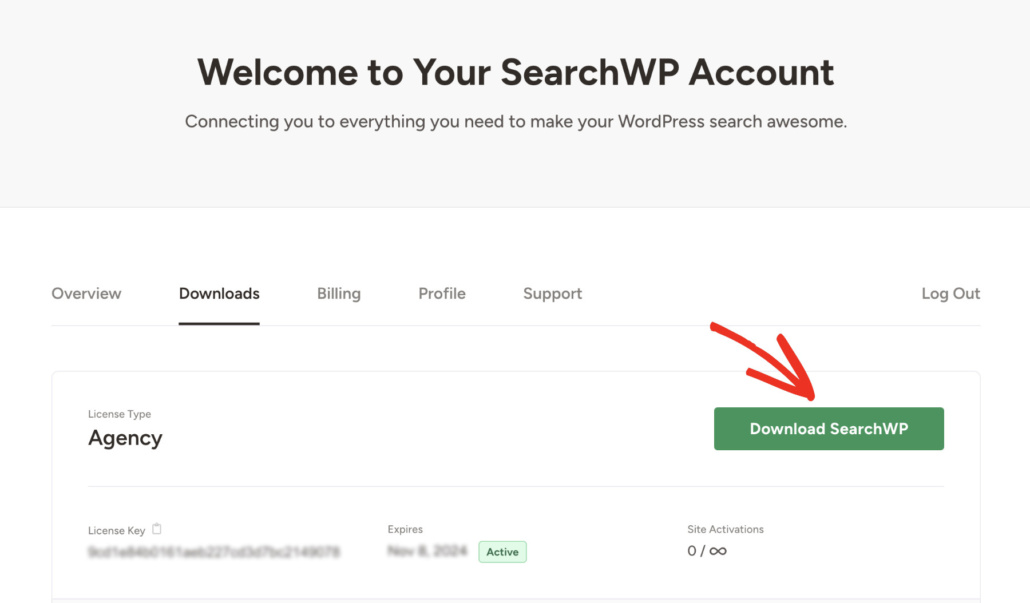
Be sure to copy your license key from the same location; you’ll need this key later to activate your SearchWP plugin.
Next, you can install and activate the plugin on your WordPress site. If you haven’t installed a plugin before, here is a beginner-friendly guide on how to install a WordPress plugin.
Upon activation, a welcome wizard will appear with the option to click “Start Onboarding Wizard” to help with the initial setup configuration.
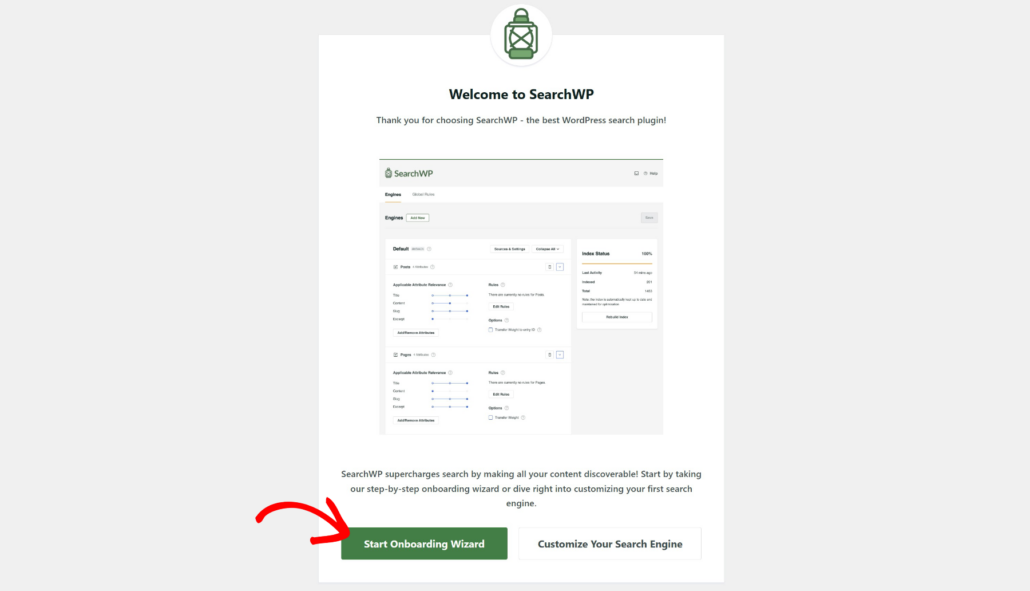
Simply follow the on-screen instructions in the wizard to complete the setup. SearchWP will begin building its search index in the background right away.
Step 2: Make WordPress Blogs Searchable
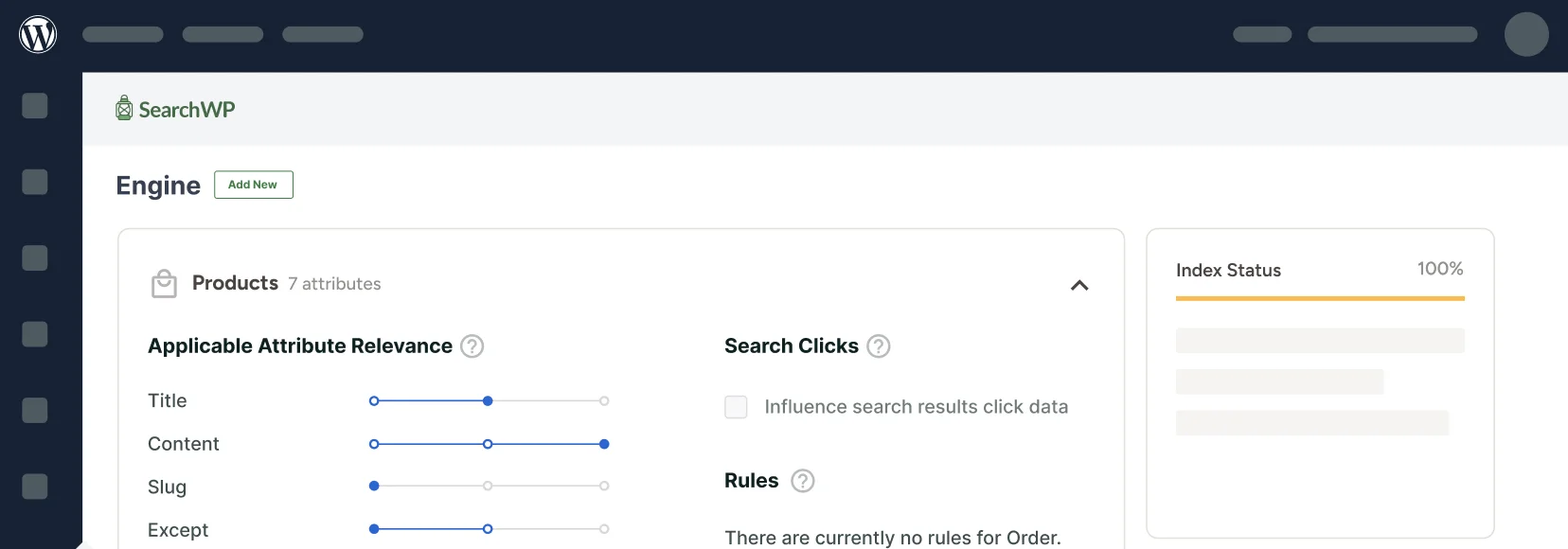
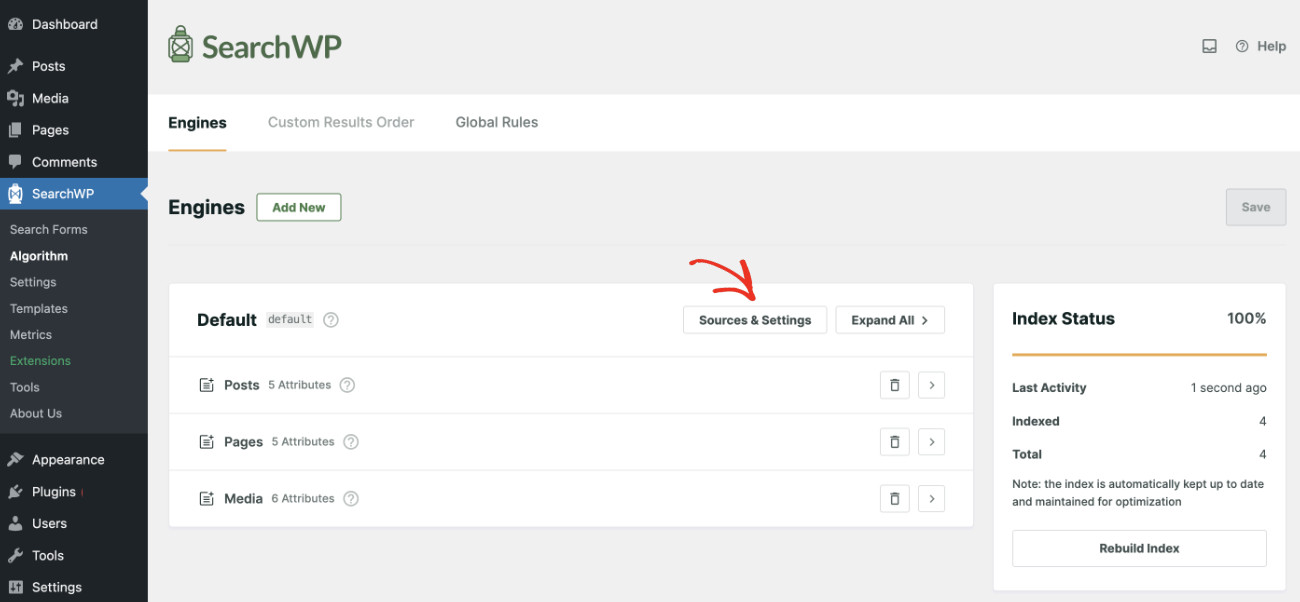
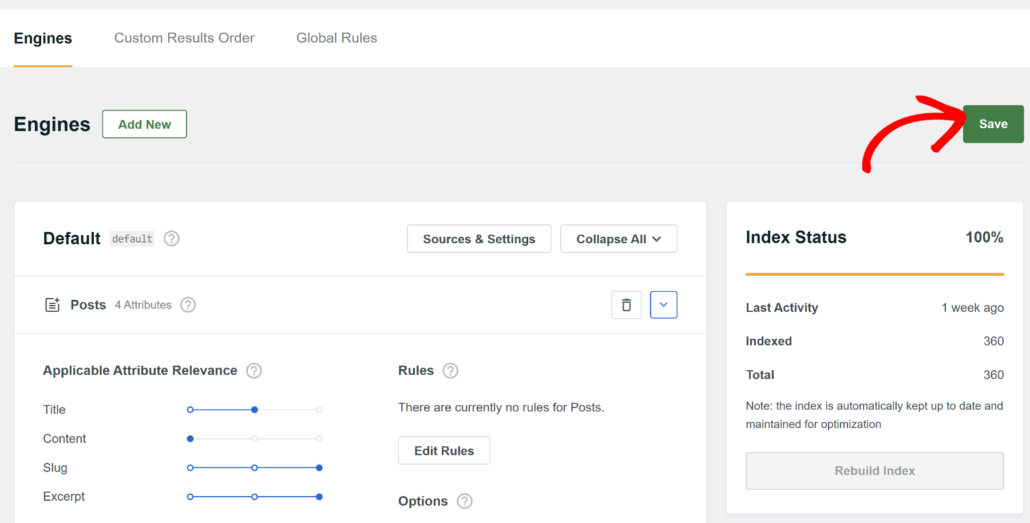
From your WordPress dashboard, you can navigate to SearchWP » Algorithm.
This is where you’ll control what to include in the search process and how much weight each piece of content carries in search results.
To start, click Sources & Settings to open the sources panel. You’ll see your post types listed here, and Posts should already be enabled.
The default Engine indexes Posts, Pages, and Media files by default.
If you want only to make WordPress blogs searchable, select Posts from the Source list and unselect the rest.
This will make sure only blog posts are returned in the search results.
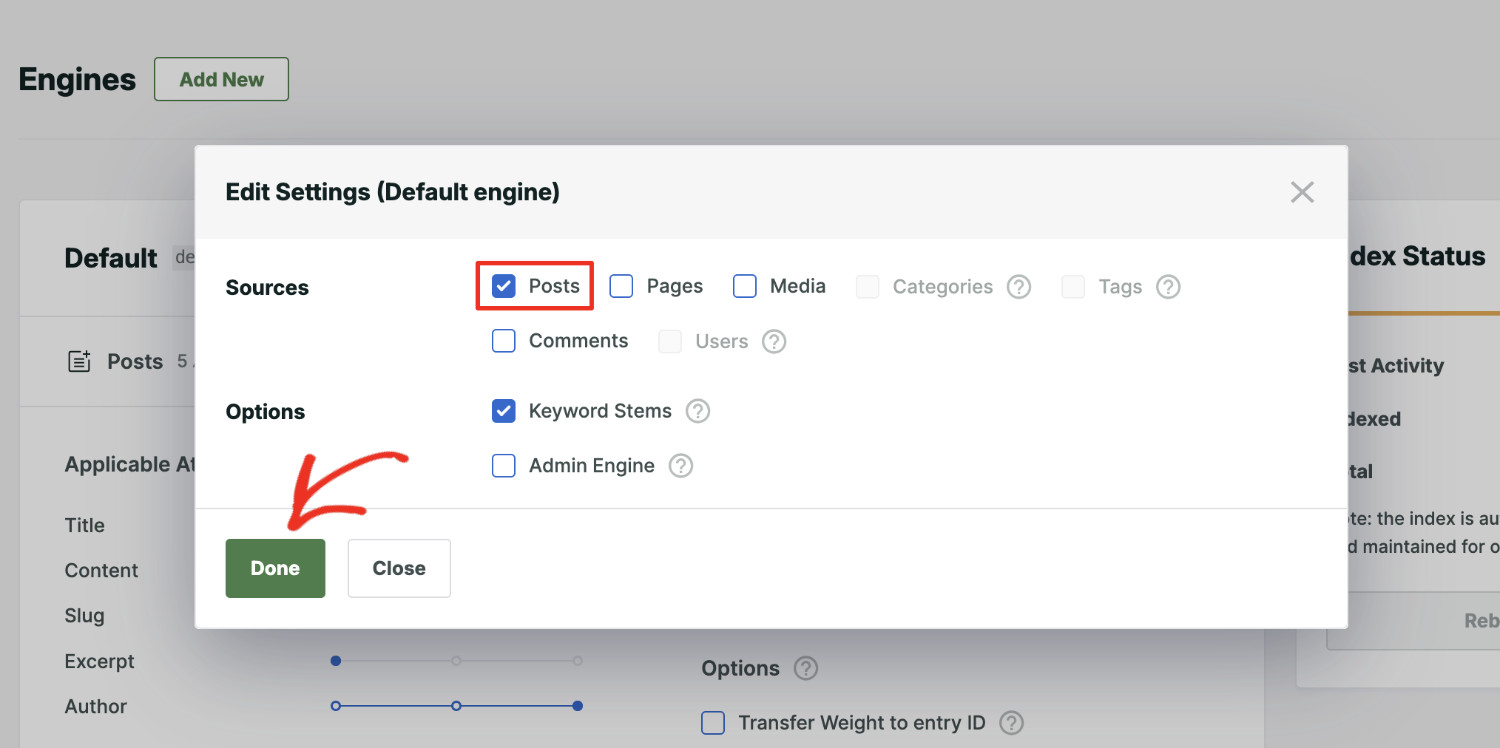
Click Done to save the changes when you’re finished.
Next, you can head to the Posts section and click Add/Remove Attributes to include additional information, like categories and custom fields, in the search process.
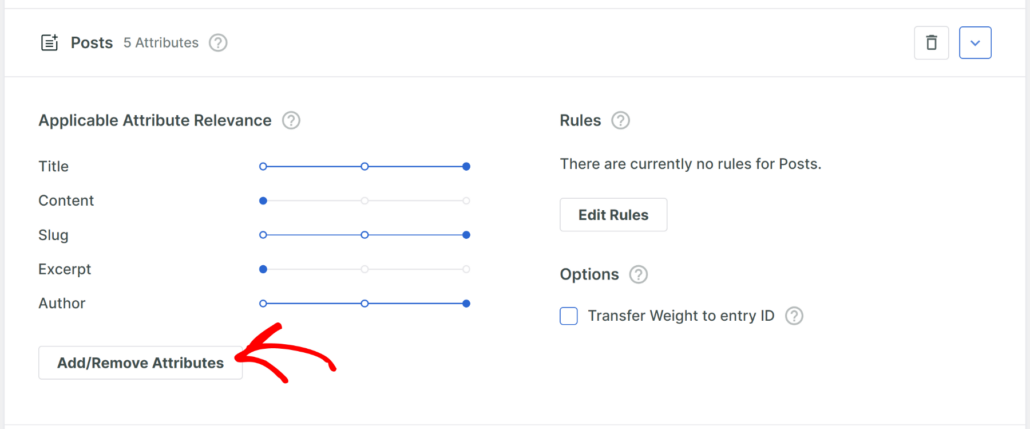
By default, SearchWP will make the title, content, slug, excerpt, and author searchable.
Besides that, you can also include custom fields in the search process. For example, let’s say you have a food blog and have custom fields to show ingredients or cooking equipment. You can add them under the Custom Fields section.
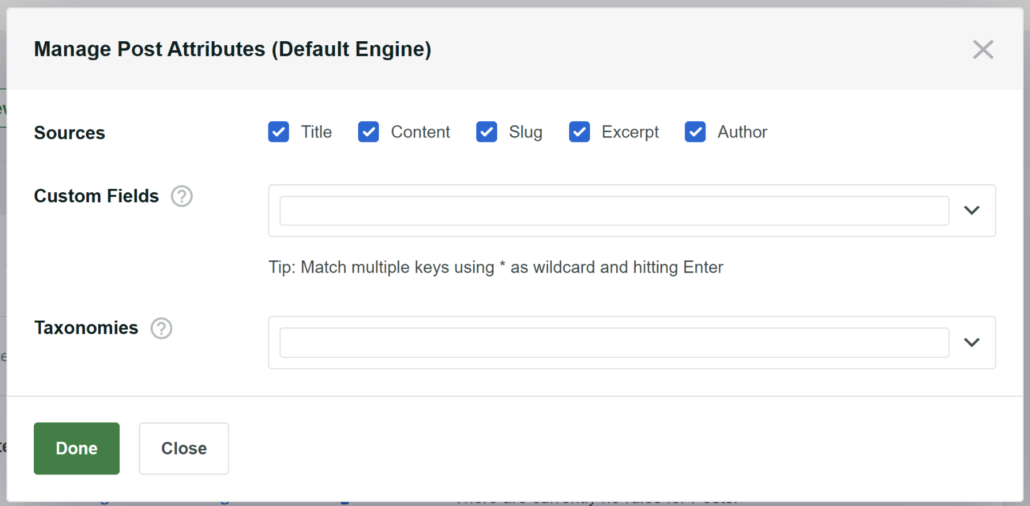
Go ahead and click Done when you’ve made the changes.
When you’re happy with the settings, click Save in the top right corner.
Step 3: Add A Search Bar To Your Preferred Location
Before you can feature a search bar on your site, you’ll need to create one. Fortunately, with SearchWP, setting up a search bar is straightforward and doesn’t require any coding.
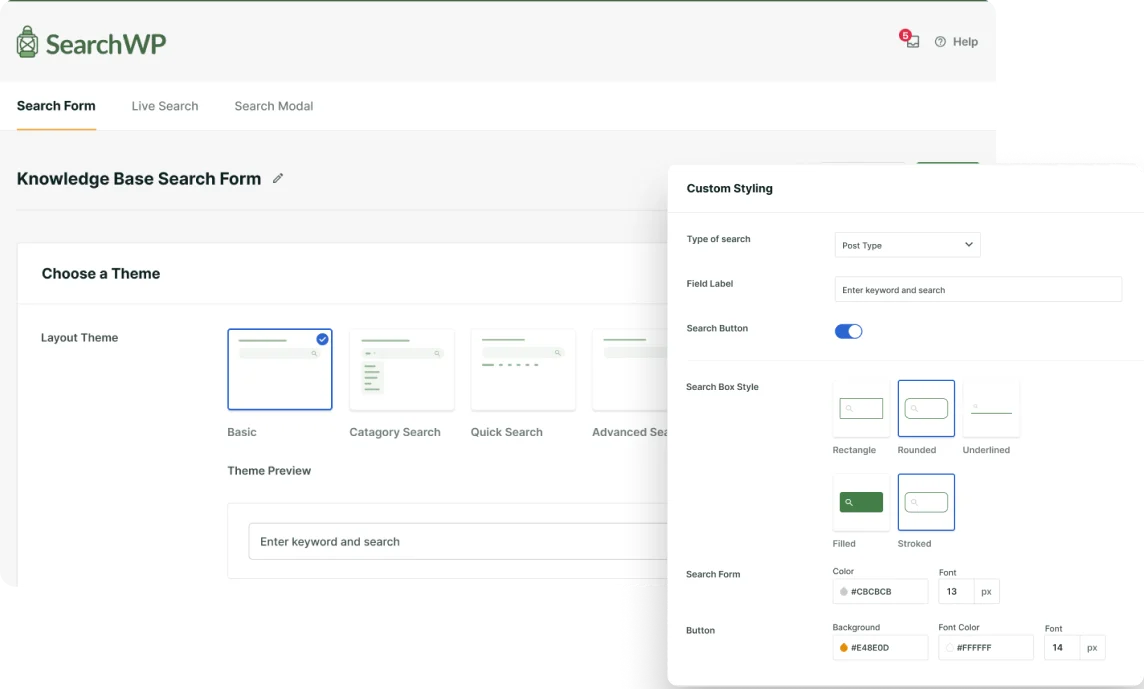
From your WordPress dashboard, you can navigate to SearchWP » Search Forms and click Add New.
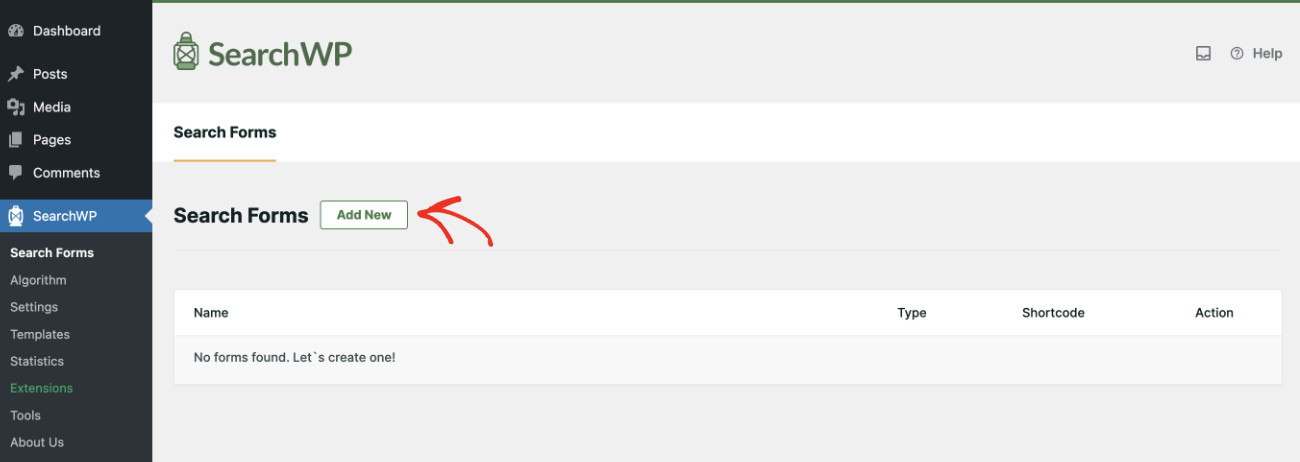
On the next screen, you can name your search form and choose a theme layout.
Then, configure and style it according to your needs.

SearchWP allows you to set up multiple Engines, so you can specify which engine this search form uses, optimizing it for different content types.
Additionally, you can use the SearchWP results page to customize and enhance the WordPress search results page fully.

When you are done, simply scroll to the top of the page.
Then click Save after configuring your search form to finalize your setup.

Next, to display the search bar on your website, click Embed located next to the Save button.
This action will provide you with simple instructions on how to embed the search form on your site.

SearchWP lets you display a search form in 3 ways: Gutenberg block, shortcode, and PHP code.
Plus, you can choose an existing page or create a new one to embed your search form.
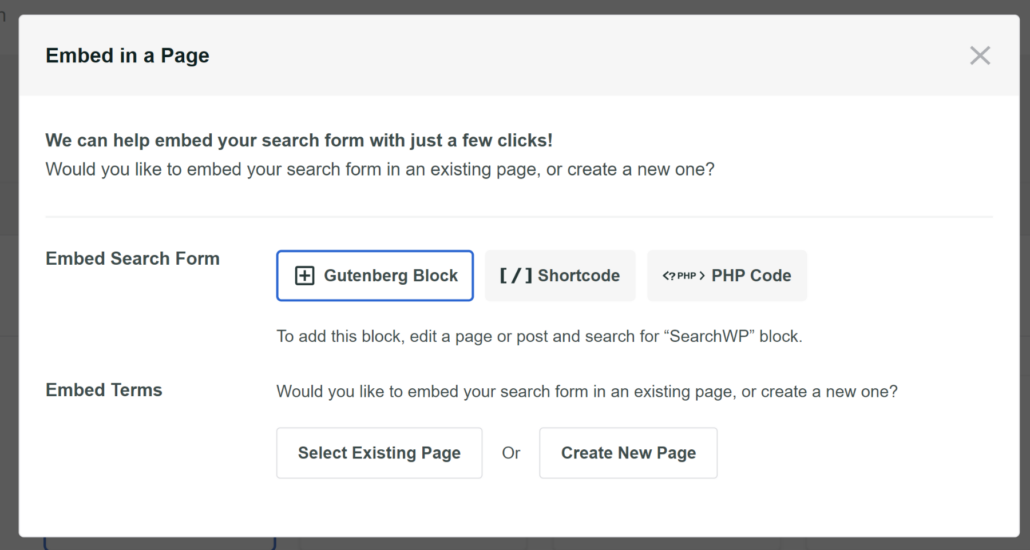
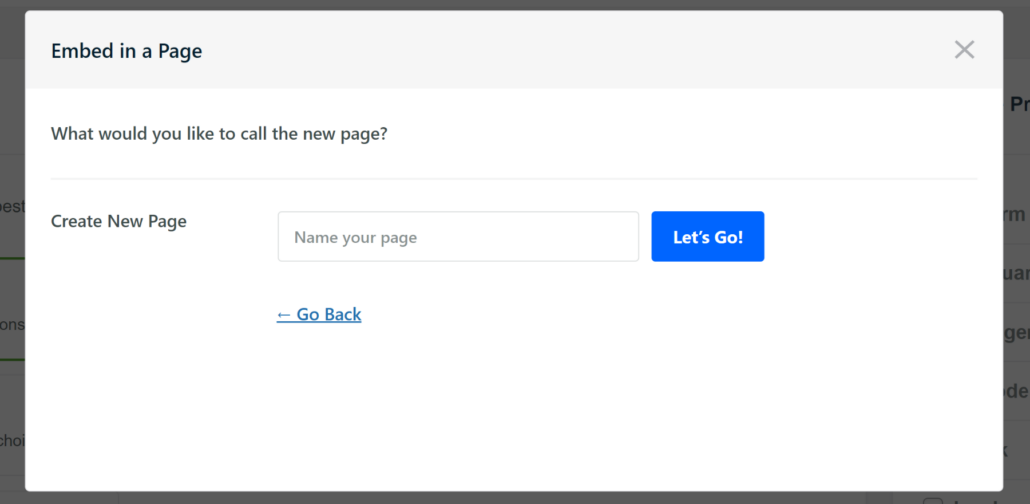
For this tutorial, let’s add a search bar using a Gutenberg Block and create a new page.
Next, you will need to enter a name for your new page and then click the Let’s Go button.
On the other hand, you can also add the SearchWP Form block to any page on your website.
To do that, open the page where you want the search bar in the content editor and click the + icon to add a new block.
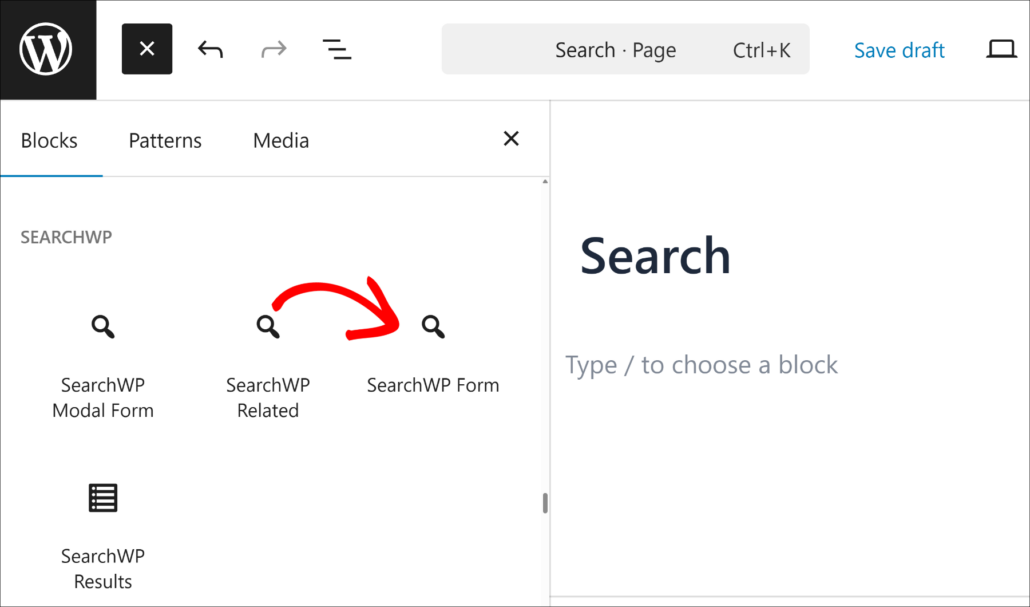
Next, you will need to select the SearchWP Form block from the list.
Once the block is added, you can click the dropdown menu and select the search form you just created.
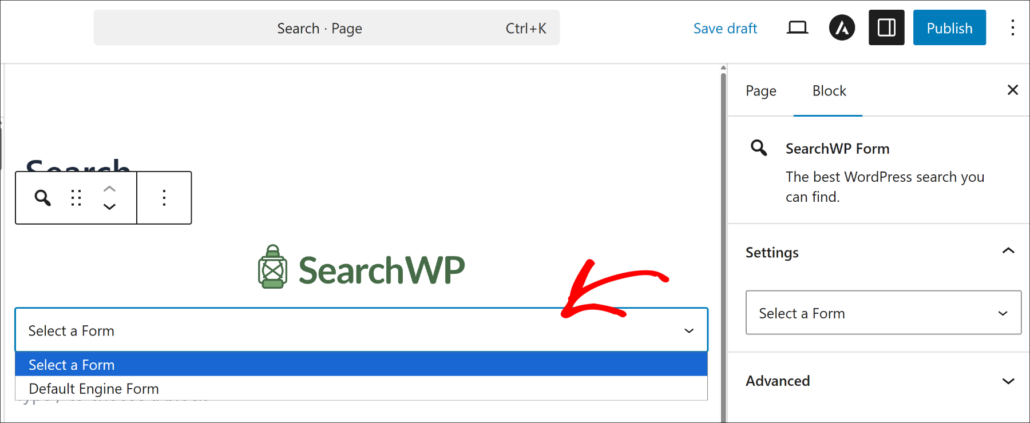
You can click the Publish button, and that’s it! You’ve successfully added a search bar to your WordPress blog.
Step 4: Test Your Blog Search
You can now visit your search form and test the new search form to see if it is looking up search forms.
For instance, run two test searches with intentional typos: “Wordprss beginer tips” and “tutorail for WordPress.” SearchWP’s fuzzy matching should return relevant posts for both, even though neither phrase is spelled correctly.
If you’re seeing accurate results ranked by relevance rather than publish date, your blog search is working exactly as it should.
From our experience, this is usually the moment site owners realize how much content their visitors simply couldn’t access before.
Take Your WordPress Blog Search To The Next Level
With SearchWP, you can enhance the search capabilities of your WordPress blog significantly and enhance user experience. Here’s how you can use SearchWP to introduce advanced features that not only make WordPress blogs searchable but also intelligently responsive to your users’ needs:
Show Related Content: With SearchWP, you can showcase related content based on what users are currently viewing. This feature enriches their browsing experience by suggesting relevant articles or posts, increasing their time on your site. Implementing related content encourages deeper exploration of your blog, which can lead to improved page views and lower bounce rates.
Add Live Search: Live search transforms user interaction with your blog by providing real-time feedback as they type in the search box. This immediate response can help users refine their search queries quickly, making the search process seamless and intuitive. It enhances user satisfaction by finding the right content with minimal effort.
Set up Custom Redirects: Custom redirects can be a powerful tool to guide your users directly to the most appropriate content or page based on their search queries. This feature allows you to create a smoother user experience by redirecting searches for specific terms to a predetermined page, such as a landing page, special offer, or a popular article. It’s especially useful for marketing campaigns or when you want to highlight specific content.
Make Content Private: If your site uses the third-party PrivateContent plugin to gate content for specific user roles, SearchWP’s PrivateContent Integration extension ensures those access rules are respected in search results.
FAQs About Making Blogs Searchable
1. Does WordPress have a built-in search function?
Yes, every WordPress site includes a basic search function out of the box. It scans post titles and body content, returns results in reverse-chronological order, and breaks when a visitor makes a typo. It also skips tags, categories, and custom fields entirely, which makes it unreliable for any blog with a real content archive.
2. Why is my WordPress blog search not showing all posts?
The most common cause is that WordPress’s default engine only includes post titles and body content. Posts that are primarily described through their tags, categories, or custom fields simply don’t appear in results. Installing SearchWP and including those fields as indexed attributes fixes the issue without any coding.
3. How do I add a search bar to my WordPress blog?
After installing SearchWP, go to SearchWP » Search Forms and create a new form. You can embed it on any page using the SearchWP Form Gutenberg block, the shortcode, or a sidebar widget. For more placement options, see our guide on how to add a search box to a WordPress page.
4. Can WordPress search find content inside post tags and categories?
Not with the default engine. WordPress’s built-in search skips taxonomy terms entirely, which means posts labeled only through their tags or categories are invisible to visitors. SearchWP indexes tags, categories, and any custom taxonomies as searchable attributes.
Your WordPress blog now has an accurate, relevance-ranked search that indexes every post, tag, category, and custom field. Readers can find what they’re looking for even with typos, and you’re no longer losing visitors to blank search result pages.
We hope this article helped you learn how to make WordPress blogs searchable. You may also want to see our guides on how to create advanced search forms in WordPress and how to customize the WordPress search results page.
Ready to make your WordPress blog searchable? You can get started with SearchWP here.