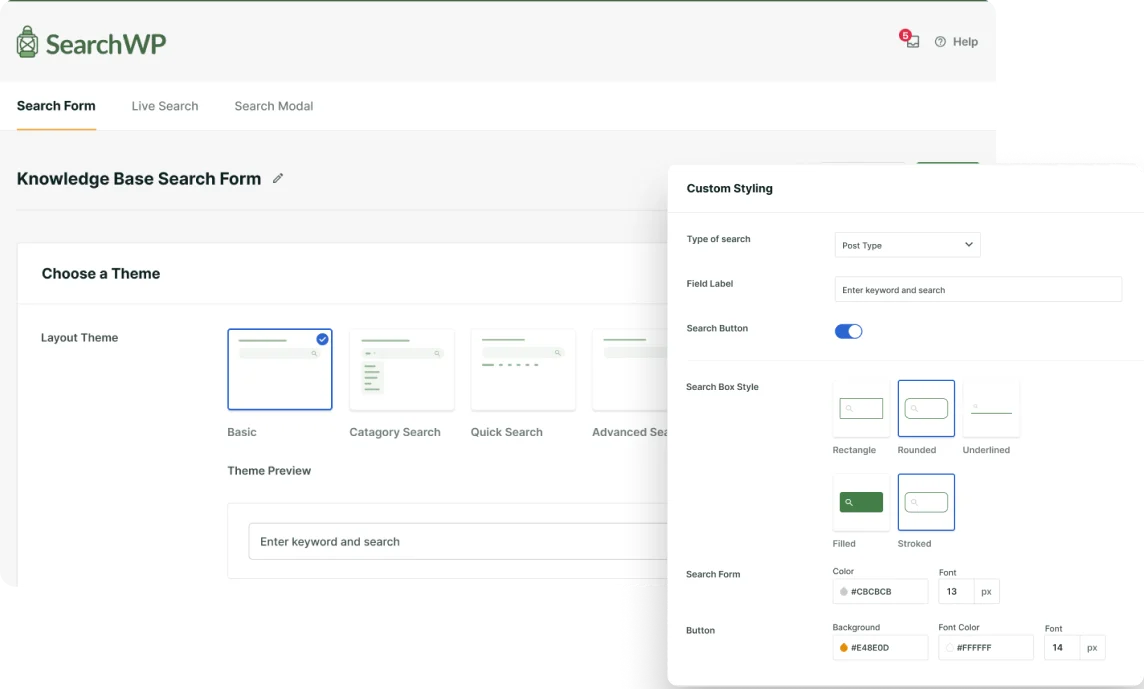
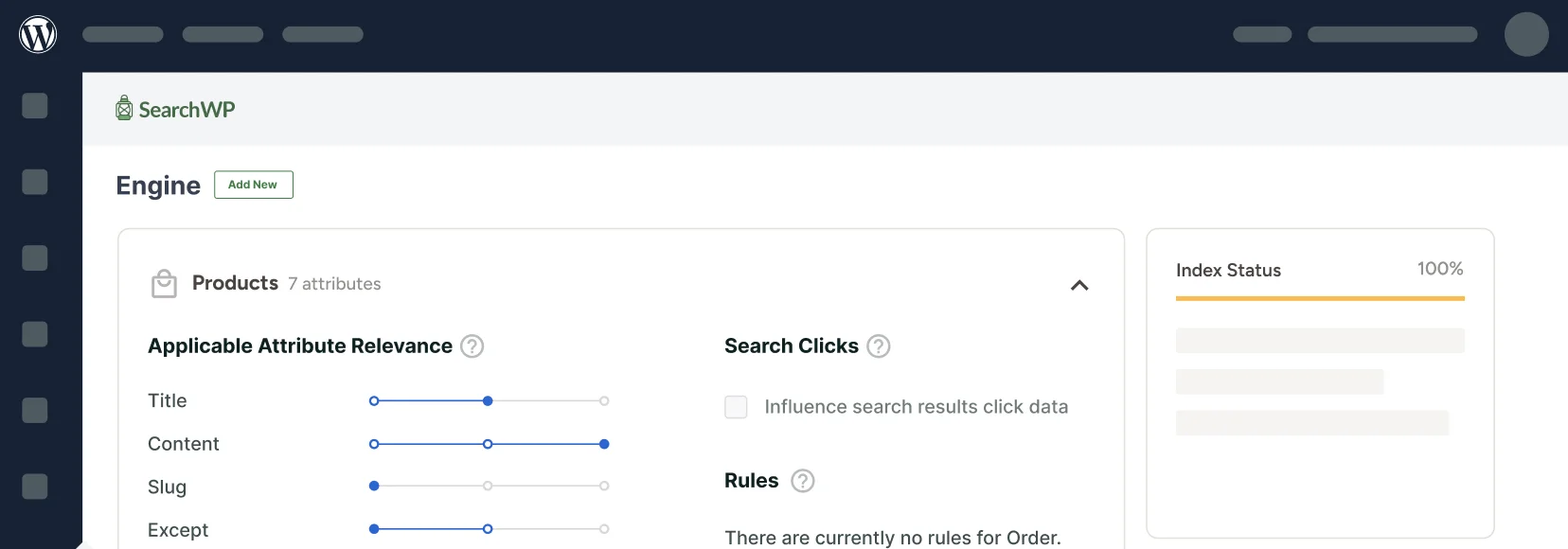



If you have PDF files on your WordPress site, chances are visitors cannot find the content inside them using the default search bar.
We see this a lot on sites that host documentation, whitepapers, case studies, or resource libraries.
Someone searches for a term they know is in a PDF, but WordPress returns nothing because it only searches post and page titles and content, not the text inside uploaded files.
The good news is that this is a quick fix.
In this article, we will show you how to make WordPress search PDF files in just 2 easy steps.
Why Search PDF Files in WordPress?
WordPress supports many document file formats, including PDFs. One of the most common formats for sharing content online. If you host documentation, guides, or downloadable resources, those files are only useful if visitors can actually find them.
Are you an author or do you run an online bookstore? WordPress gives you everything you need to showcase and sell your work.
Even if you run a blog, you can convert long guides and tutorials into PDF files so your users can download and read them later. You can offer PDFs for free or sell them as digital products.
And if your WooCommerce store sells PDFs, you can also add a search box filter to your WooCommerce store to make every product findable.
Whichever approach you take, your site visitors need to be able to find these files quickly. The native WordPress search can locate PDF files in the Media Library, but it only looks at the filename and short description.
From our experience, that’s rarely enough. A visitor searching for “liability clause” in a legal guide you uploaded will get zero results unless that exact phrase is in the file title.
That’s why you need a plugin that can index and search both the full text content and the metadata of every PDF on your site. This way, your site visitors can find your PDF files faster and get results that actually match what they’re looking for.
You can also search other media files in WordPress using a similar setup. But PDFs are worth addressing first, given how much valuable content they typically contain.
So, let’s show you how to make WordPress search PDF files without any previous technical experience.
How To Make WordPress Search PDF Files Using SearchWP
The easiest way to make WordPress index and search PDF files is to use a plugin.
SearchWP is the most powerful WordPress search plugin available in the market. It offers many advanced features that help improve your site’s search capabilities.

SearchWP is the best WordPress search plugin, trusted by over 50,000 website owners.
It lets you index and search the full text of every PDF in your Media Library, along with metadata like author, title, and subject, without writing a single line of code.
- Document Content Indexing: When SearchWP processes a PDF, it reads and stores the complete text layer of the file. Any phrase that appears anywhere inside the document becomes searchable, not just the filename.
- PDF Metadata Search: SearchWP also indexes PDF metadata fields like the author’s name, document title, and subject. A search for “John Smith” will surface every PDF authored by John Smith, even if his name only appears in the metadata and not in the visible body text.
- Multiple Search Engines: SearchWP lets you create advanced search forms powered by dedicated engines. You can build one engine that only searches your PDF library and attach it to a resource page, while your main site search continues to work separately.
- File Type Rules: You can restrict any engine to specific file types using the built-in Rules system. Whether you want a form that returns only PDFs or one that limits search results to a specific section of your library, Rules gives you that control.
SearchWP provides full-fledged search functionalities that improve your native WordPress search in just a few clicks.
Now, let’s see how to use SearchWP to make WordPress search PDF files. All you need to do is follow these 2 steps.
Step 1: Install And Activate SearchWP
Are you ready to make WordPress search your PDF files? The first step is to grab your copy of SearchWP here.
Next, you can download the plugin zip file from the Downloads tab of your account page.
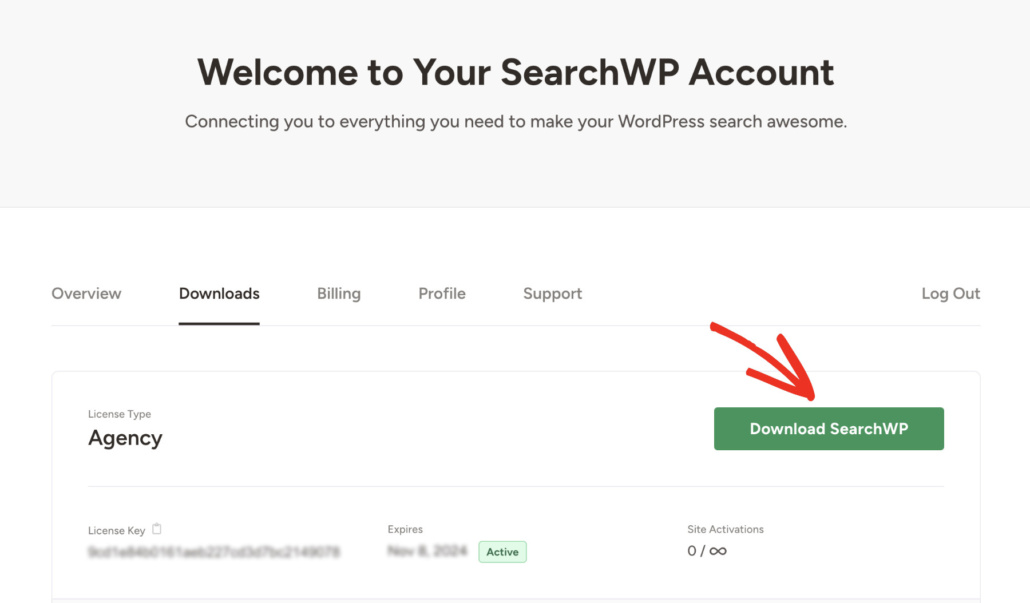
Your license key is also available here, right next to your package name. We recommend that you also copy this Key to activate SearchWP in your WordPress dashboard later.
Now, log in to your WordPress dashboard to install and activate the SearchWP plugin. If you need help with this, then please see this guide on how to install a WordPress plugin.
When you’re done, you’ll see the SearchWP welcome screen along with the setup wizard. Simply click the ‘Start Onboarding Wizard’ button and follow the onscreen instructions to complete the setup.
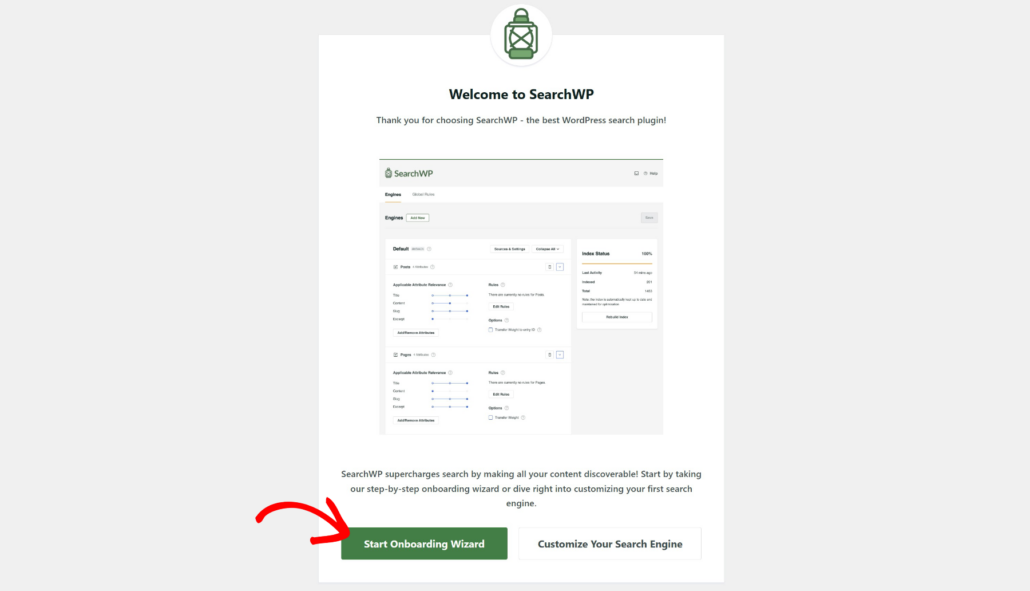
Congratulations! You’ve successfully activated the SearchWP plugin. It’s now ready for use.
Now, we’ll customize the search engine to search PDF files.
Step 2: Set Up SearchWP Engine to Make WordPress Search PDF Files
After activating SearchWP, you need to set up a search engine that searches PDF files on your site.
Setting up a search engine is like adding a mini Google search algorithm to your site. It allows you to control how SearchWP will look for search results.
You can choose from different content sources like posts, pages, or the media library. You also get to decide how relevant each attribute from these sources should be when searching.
To make WordPress search PDF files, you need to select the media library as a source for your site search.
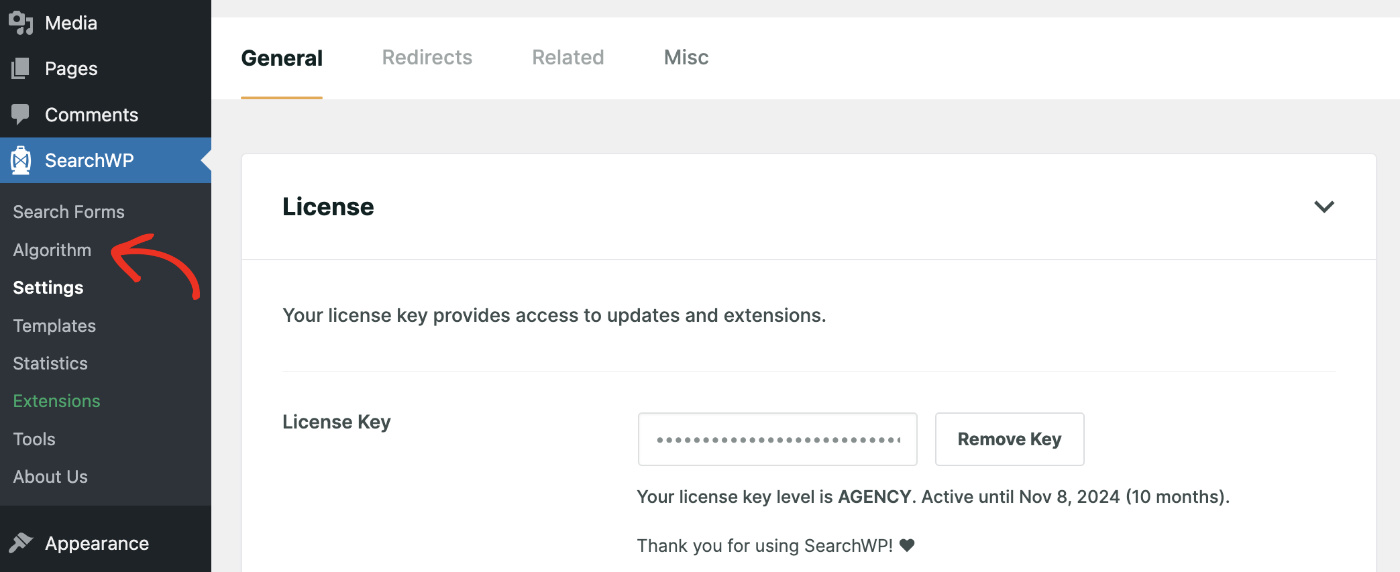
Simply navigate to the SearchWP » Algorithm page from your WordPress dashboard.
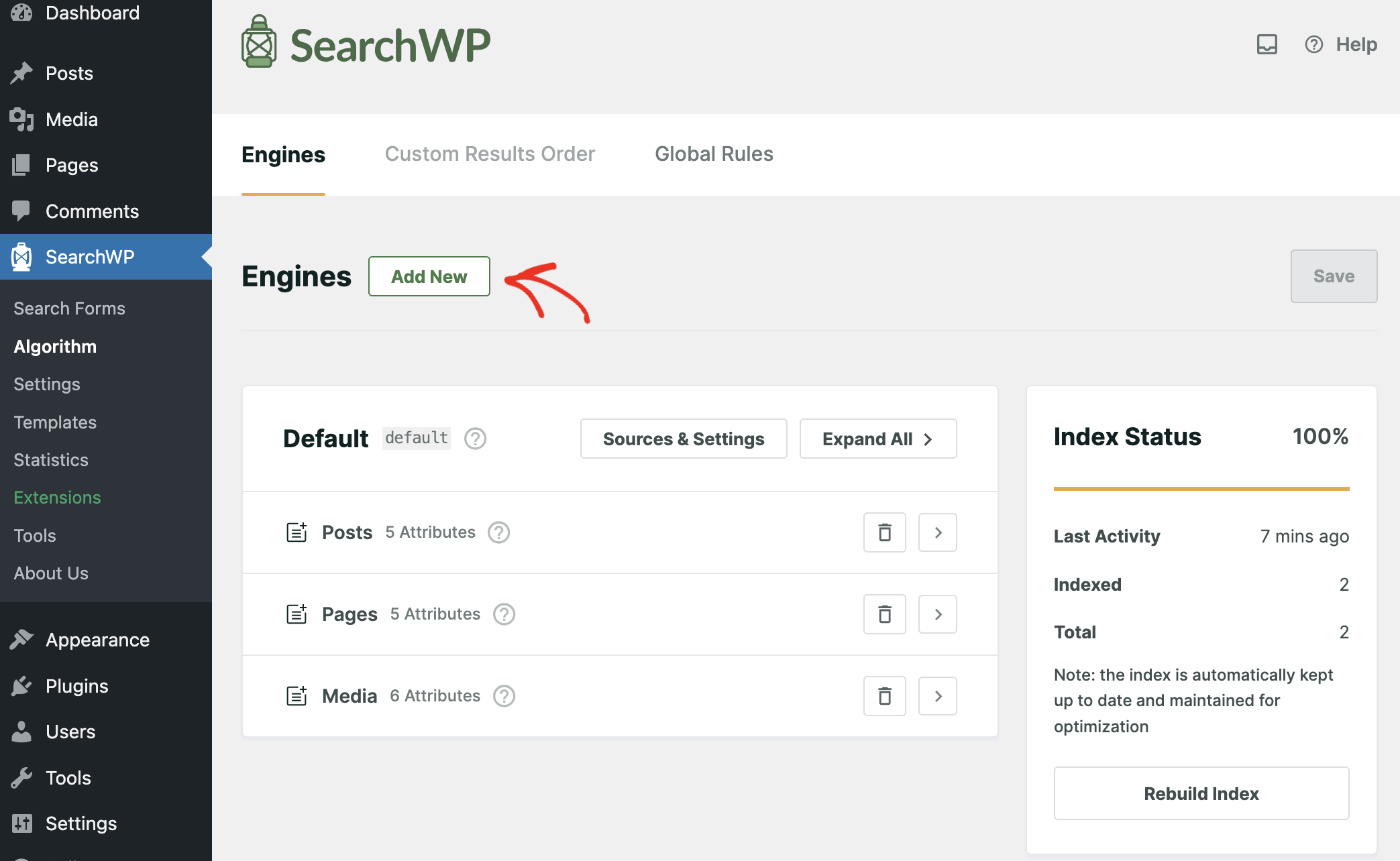
Now, you can either edit the default search Engine or create a new one for searching PDF files.
For this tutorial, let’s click Add New to configure a new engine from scratch.
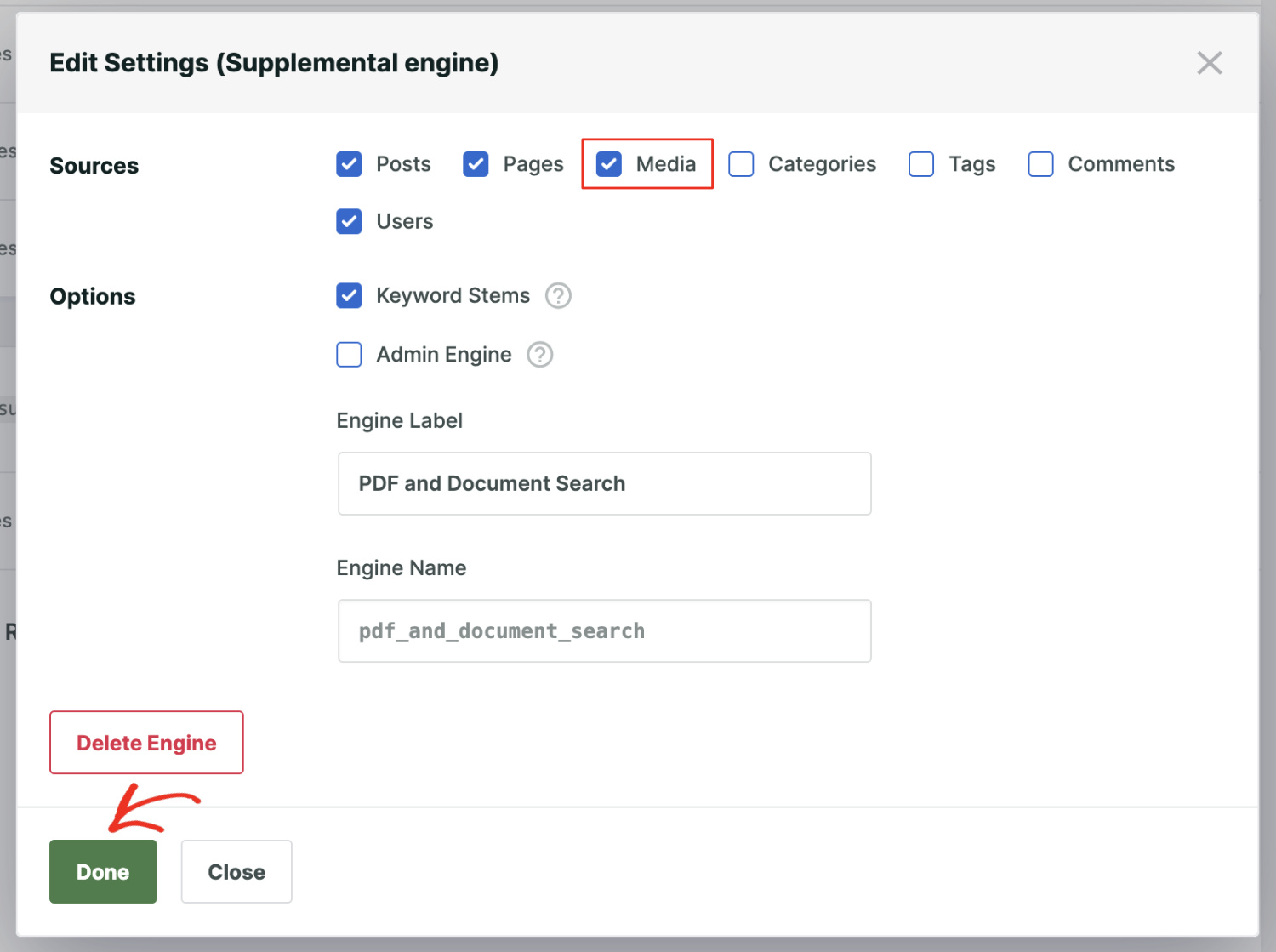
Now, from the popup that appears, make sure that the ‘Media’ source is checked and then enter a name for your engine.
When you are finished, click Done to store the settings.
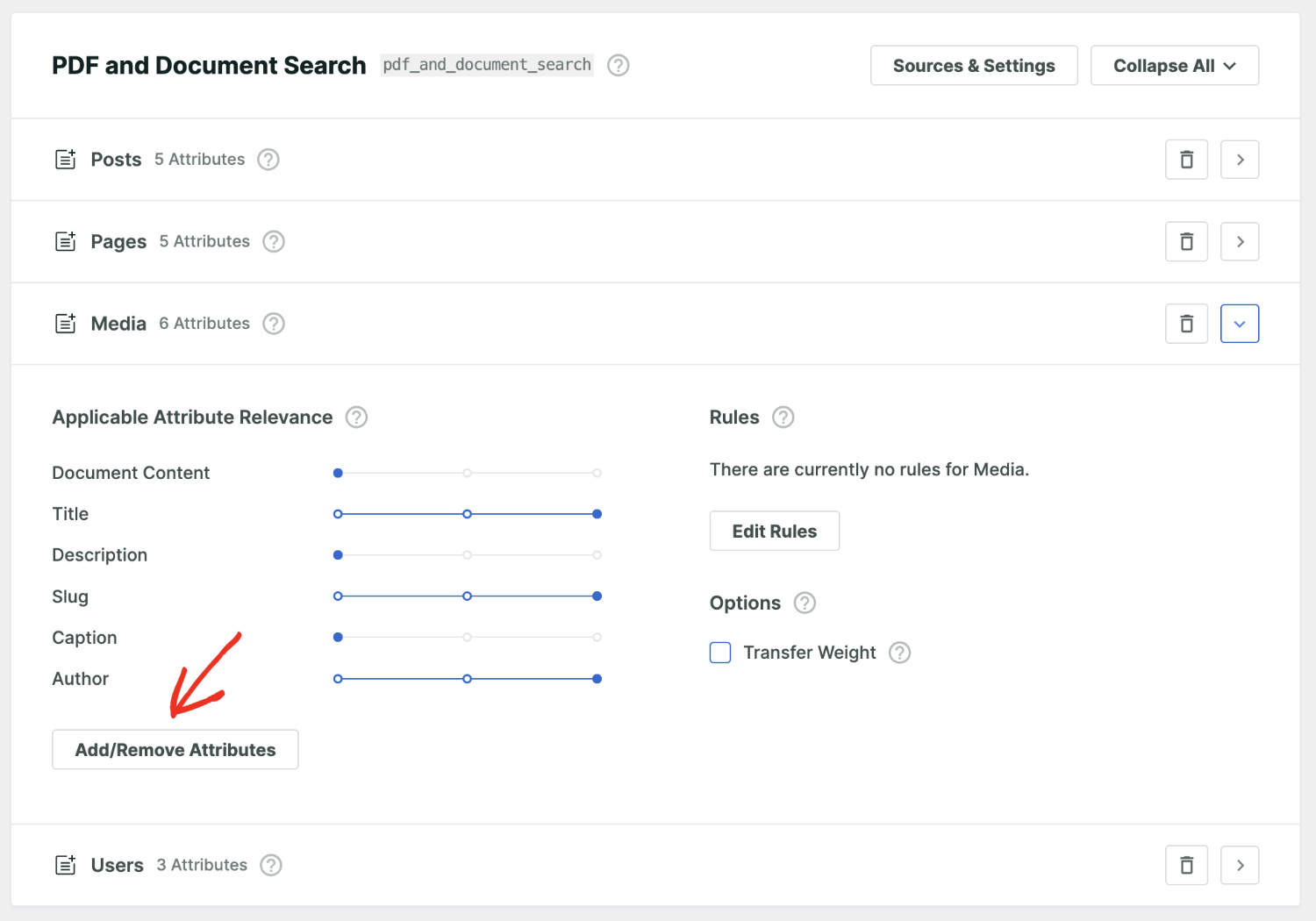
Now scroll to the Media tab and click Add/Remove Attributes.
This is where you get to choose which elements of the media library SearchWP should index.
Next, a new popup will open where you can edit the attribute sources and include taxonomies and custom fields in the search process.
From here, make sure to check the Document Content and PDF metadata boxes, as you want to make WordPress search PDF files and other types of documents.
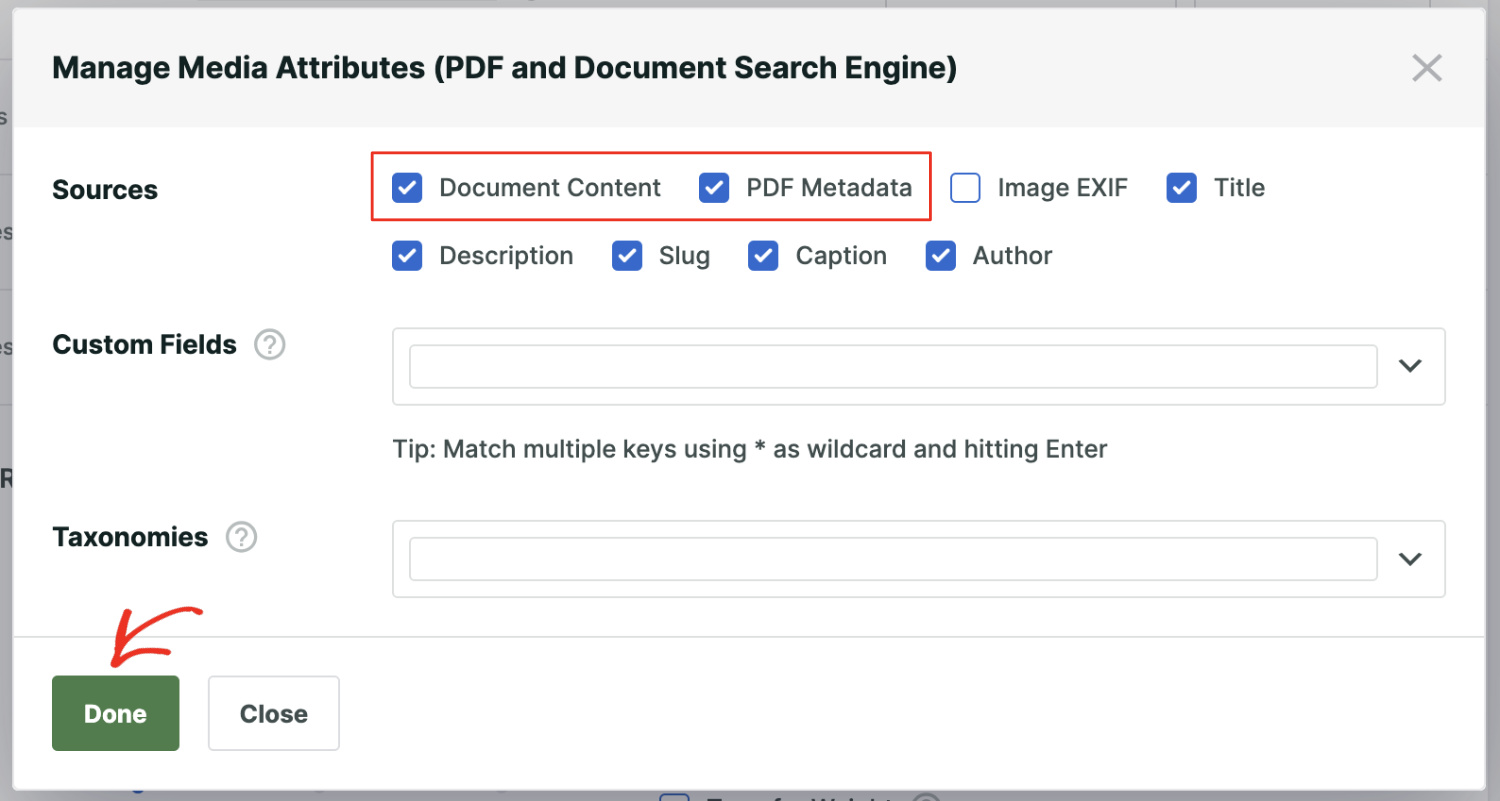
After doing this, simply click the Done button.
You can also add specific rules to the Media tab. Click Edit Rules to do this.
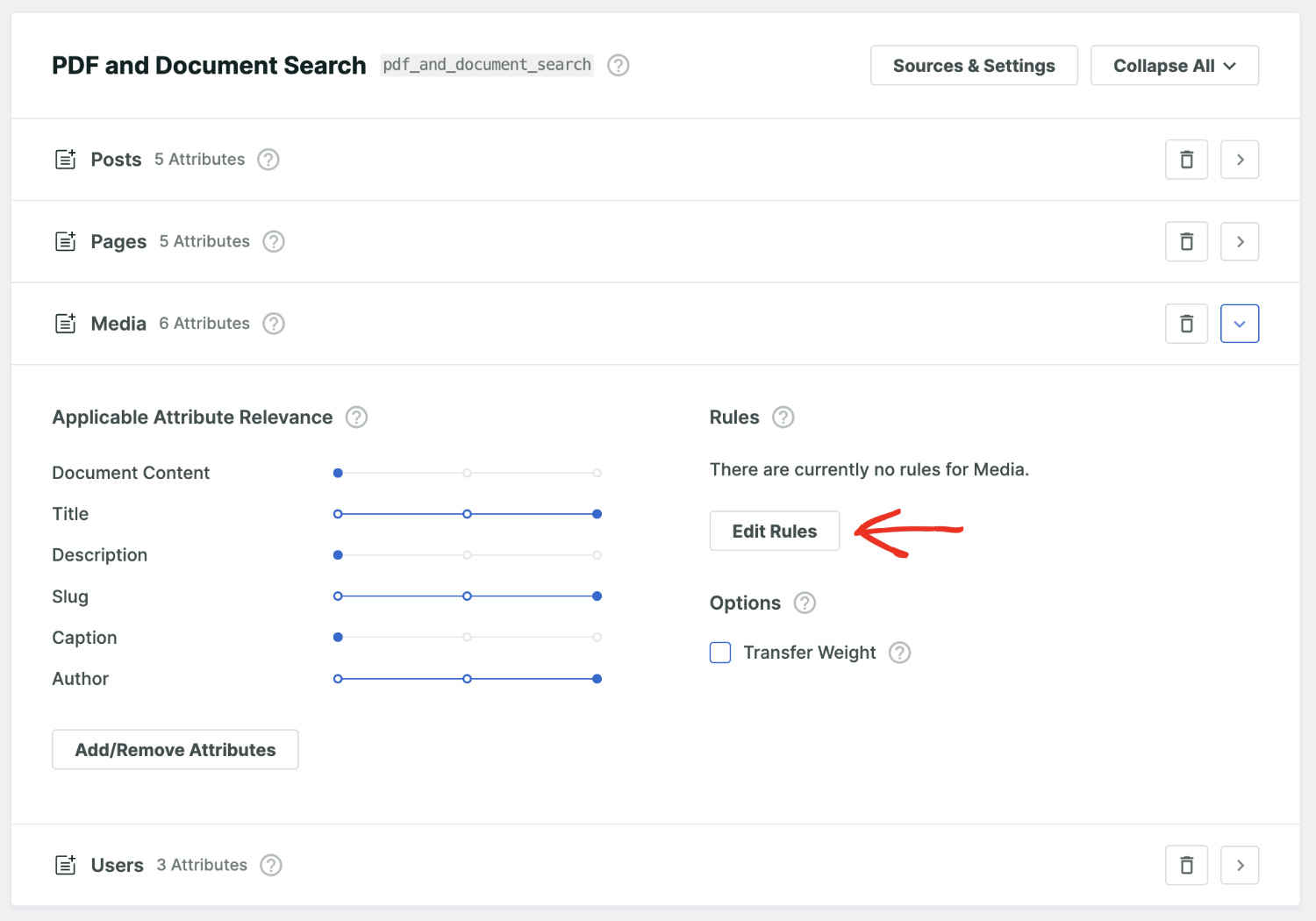
For example, you can decide to show results for PDF files only. To do so, you can click Add Rule.
You’ll need to set the Engine to show entries only when the file type is in PDFs. Click on the blank field and choose PDFs.
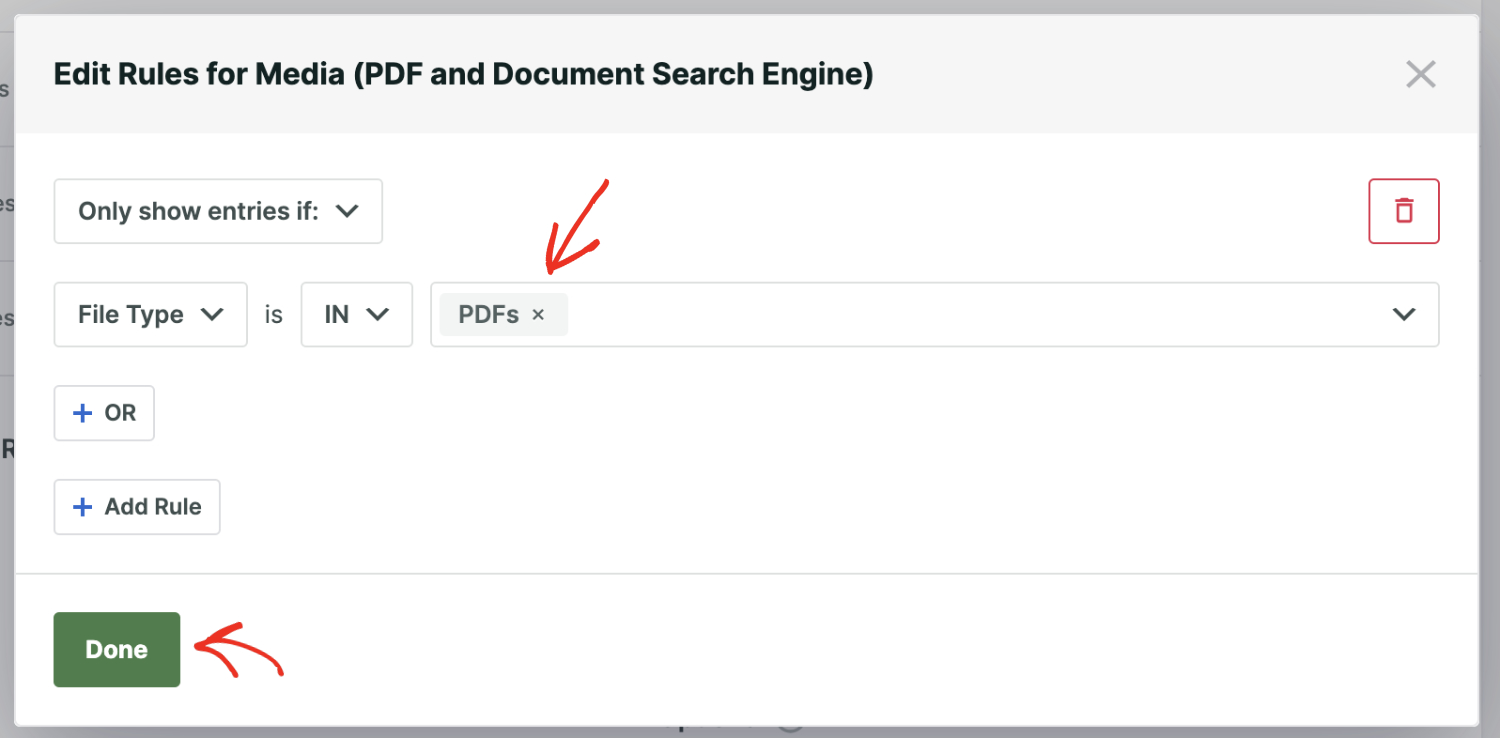
After adding the rule, you can click the Done button.
Finally, click Save Engines to save the new Engine settings.
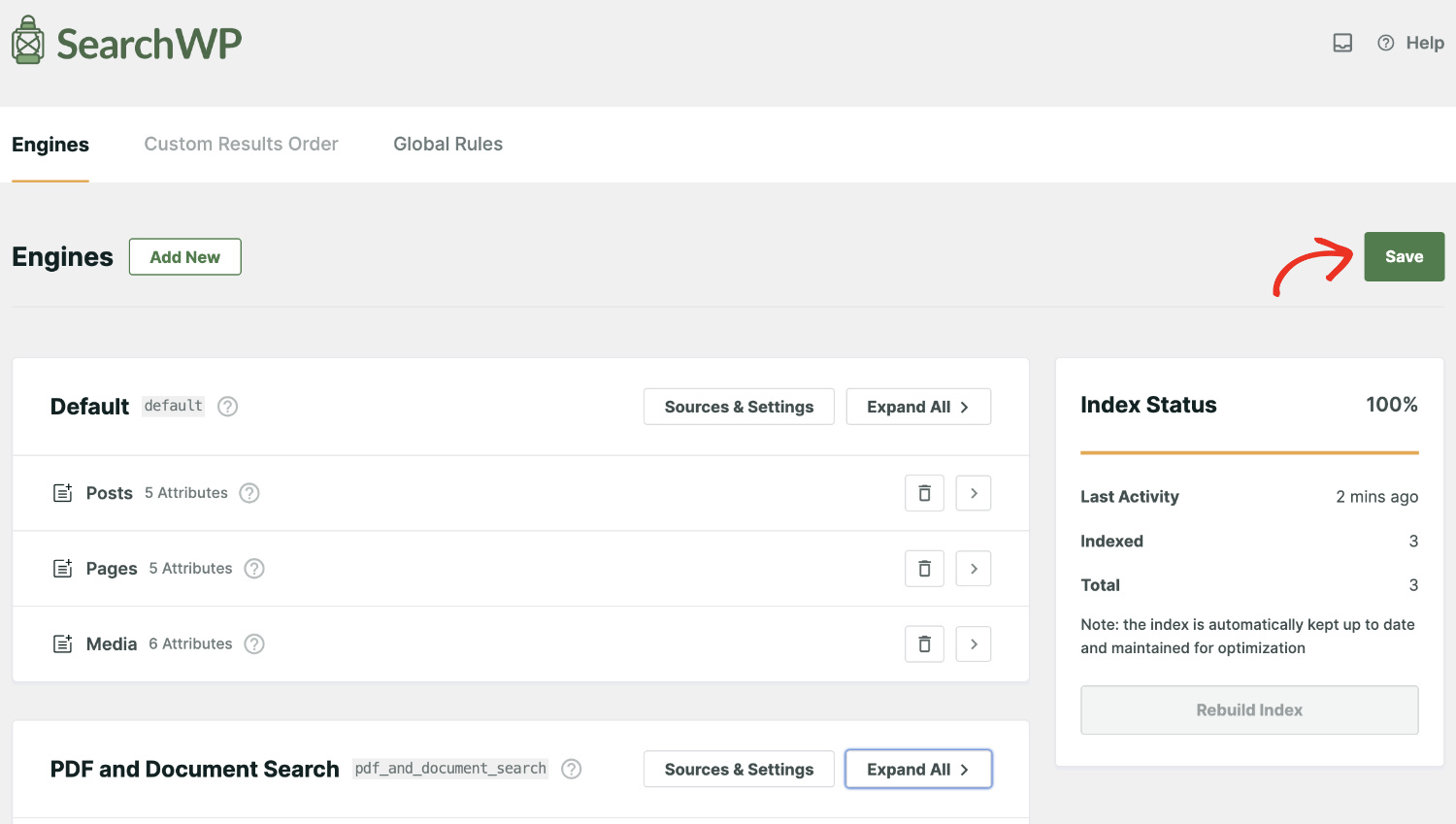
SearchWP will then apply your new preferences by rebuilding your search index.
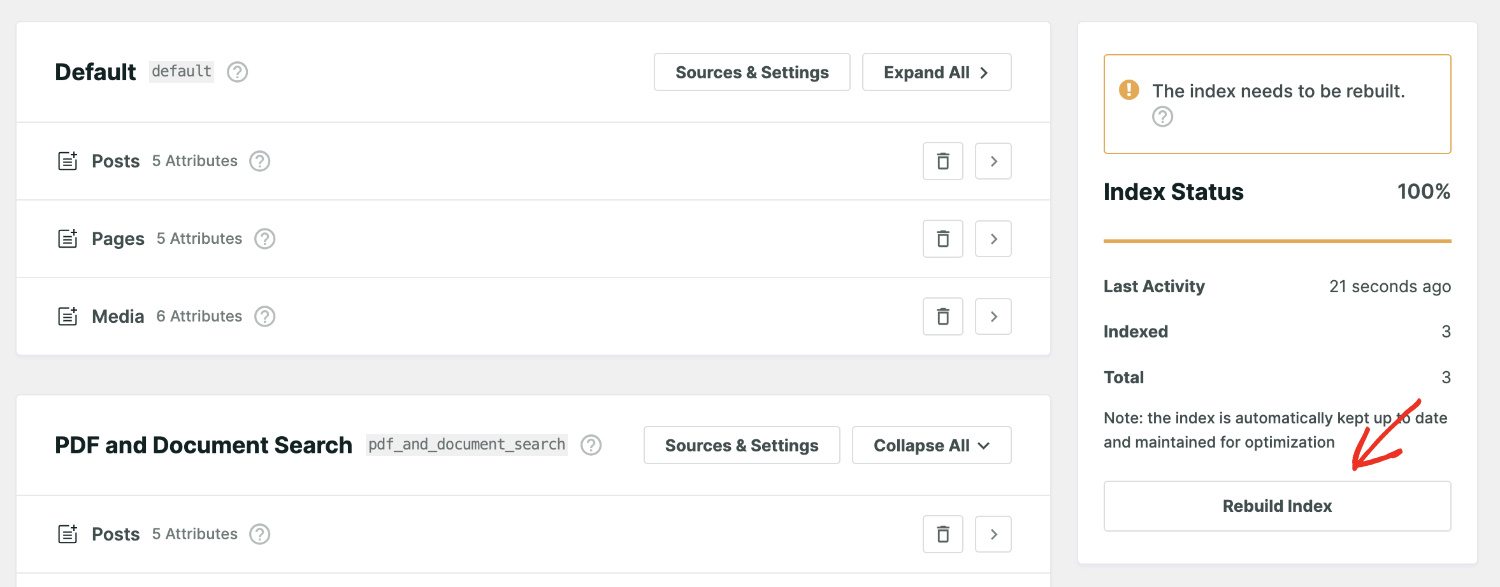
However, depending on the state of your website, you may need to rebuild the index manually. In which case, go ahead and click Rebuild Index.
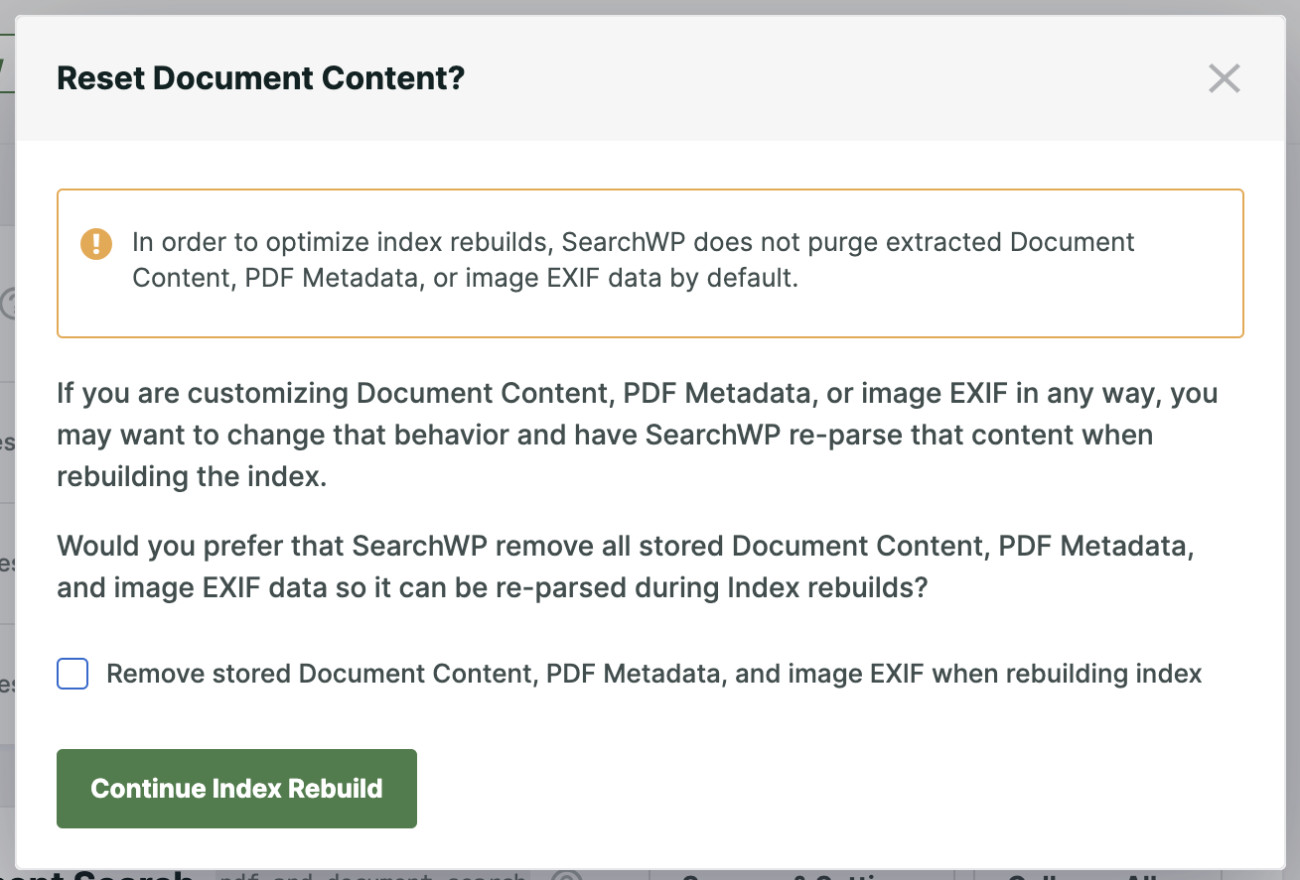
The following popup will appear soon after. What it means is that when a PDF or document file is indexed in SearchWP, it extracts all indexable data, such as text, and stores it in its database.
In other terms, a copy of the PDF or the document file is stored in the SearchWP database.
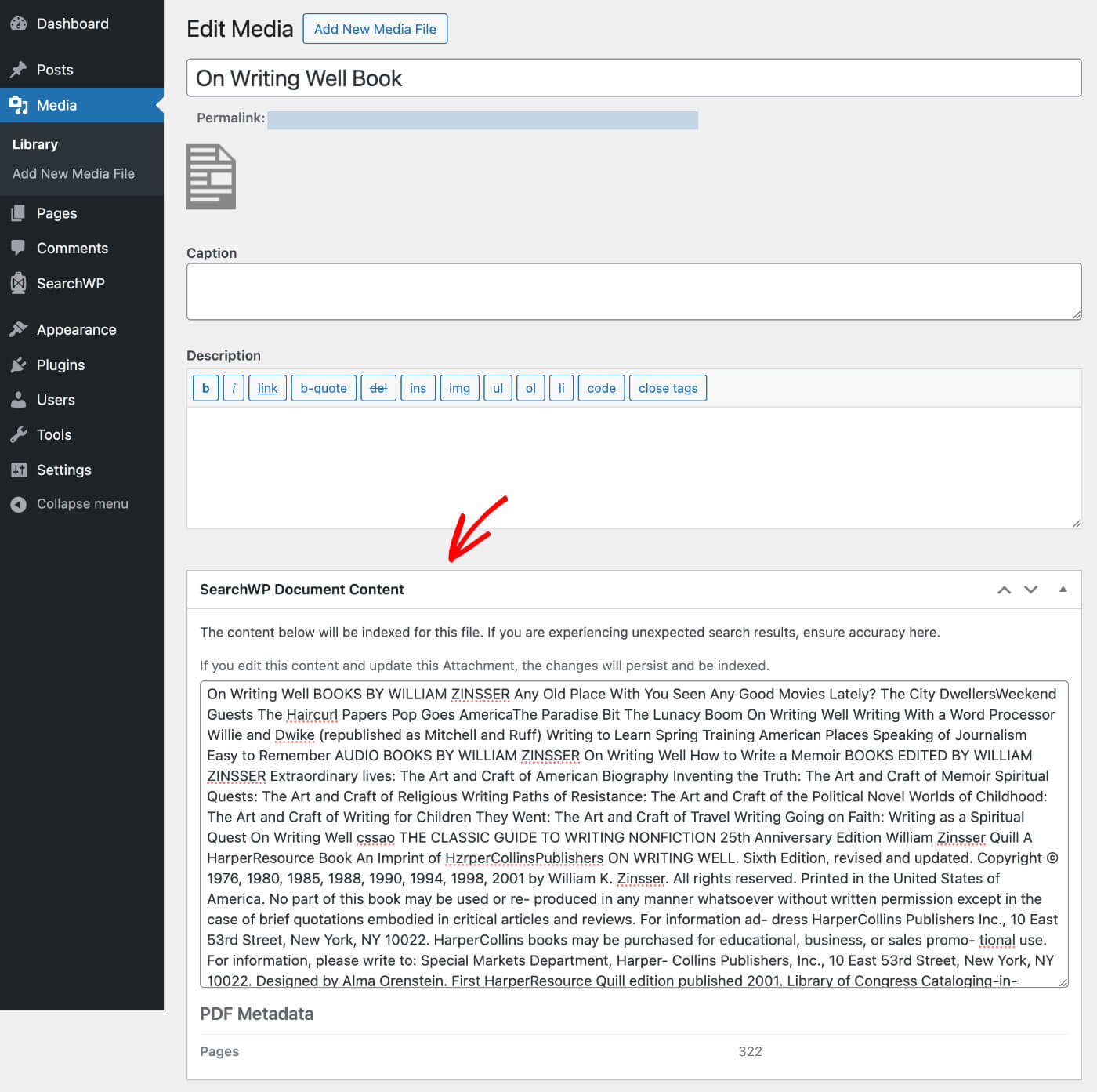
SearchWP is so advanced that it even lets you modify the extracted content from the original file. So you can take more control over the content.
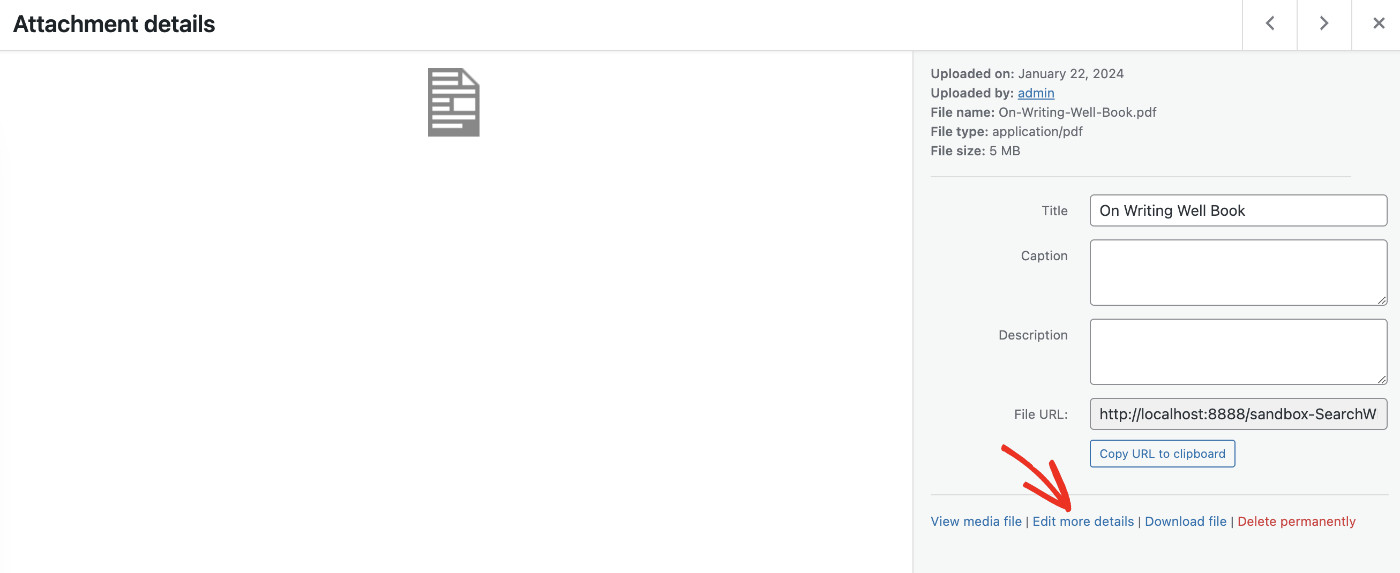
To do that, you need to open up the file from Media. Click on the PDF or document file of your choice, and it will pop up a modal. From here, you can click on Edit more details.
Now, you’ll see a section for SearchWP Document Content.
This is where the extracted content is stored. If you wish, you can modify the data from here.
Let’s come back to the Reset Document Content modal. If you’ve modified any file and want to keep the changes, you must leave the checkbox as is.
However, if you want to reset and scrape all the modifications you’ve made to all the files, then you need to check “Remove stored Document Content, PDF Metadata, and image EXIF when rebuilding index.”
This will erase all modifications and restore all files to their initial format. Therefore, we advise you to proceed cautiously.
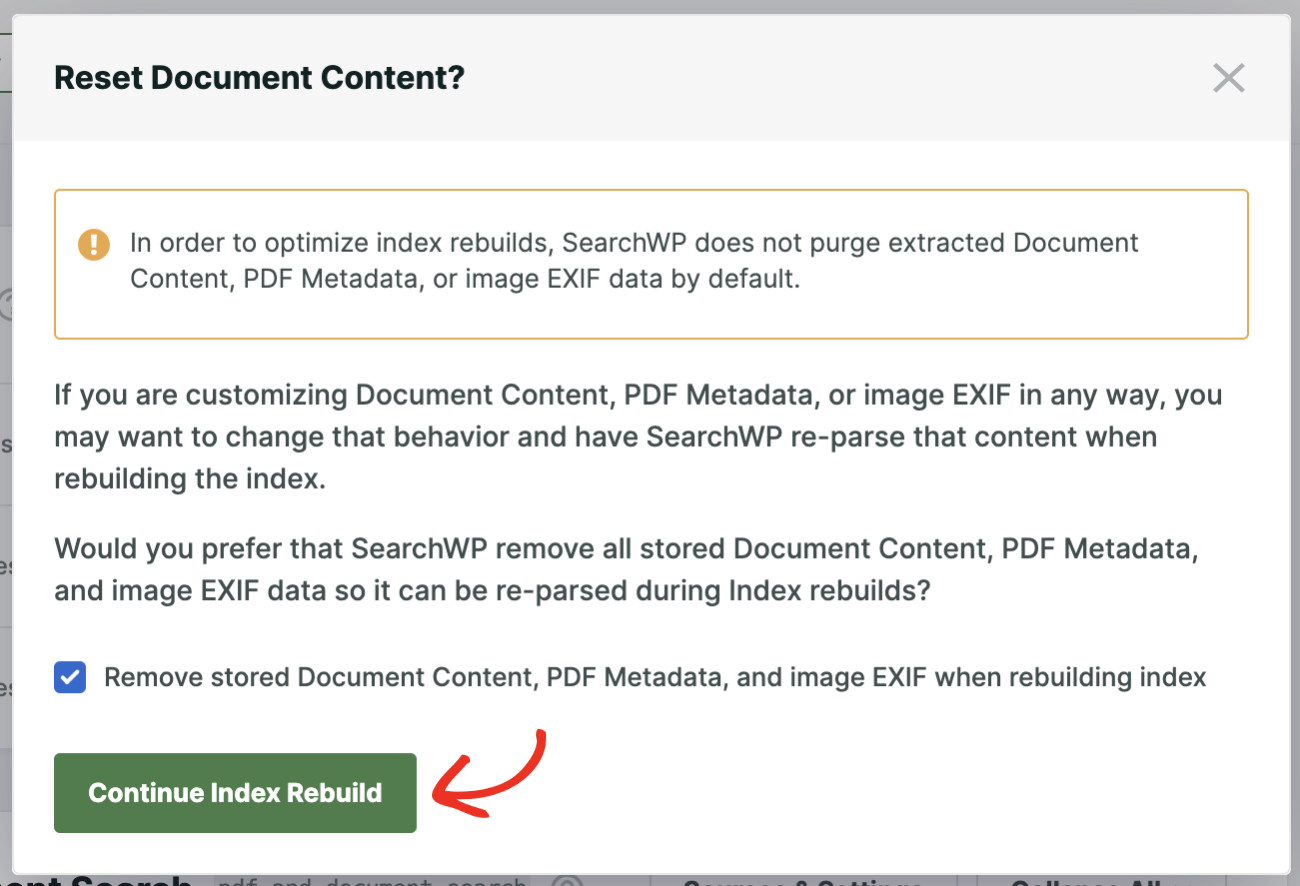
Finally, you can click Continue Index Rebuild.
Congratulations! Your WordPress site can now index and search PDF files.
You can plug this Engine into any search form created with SearchWP. We have created a detailed guide on how to create advanced search forms in different locations and use different Engines.
Now, when your site visitors search for a keyword that’s in the PDF file text or an author’s name, they can find all the relevant PDF results.

FAQs About WordPress PDF Search
1. Does SearchWP work with all PDF files?
Yes, as long as the PDF contains actual text (not scanned images). SearchWP reads the text layer of a PDF. If the file is a scanned image without embedded text, there is no text content to index. For scanned PDFs, you would need to run OCR on them first to make them text-searchable.
2. Will existing PDFs be indexed automatically?
Yes. After you enable the Media content source and save your settings, SearchWP will index all existing PDFs in your Media Library, not just newly uploaded ones.
3. Can I control which PDF files appear in search results?
Yes. You can use SearchWP’s Rules feature to include or exclude specific file types, categories, or even individual files from your search index. This gives you full control over what appears in search results.
4. Does indexing PDF files slow down my WordPress site?
No. SearchWP runs its indexing process in the background and does not affect front-end performance. The indexing happens server-side and only runs when content is added or updated.
We hope this article helped you learn how to make WordPress search PDF files. You may also want to see our guide on how to add a WordPress search by category or add a WooCommerce search form to your shop page.
Ready to make your WordPress site search PDF files? Get started with SearchWP!